

Principal

Client Alerts 

What We Know About Changes to the H-1B Visa Process
by Sufen Zhang, Tina R. Goel on September 26, 2025
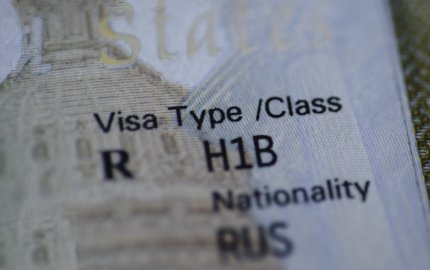
Close up view of a Visa that shows the type, class, and nationality.
President Donald Trump signed a proclamation last week, “Restriction on Entry of Certain Nonimmigrant Workers,” purportedly to reduce the use and abuses of the H-1B non-immigrant classification and adjust the prevailing wage threshold in order to prioritize petitions for highly compensated and highly skilled H-1B workers. While the situation is fluid, here is what we know: The proclamation became effective Sept. 21. The Department of State, U.S. Customs and Border Protection, United States Citizenship and Immigration Services and the White House have
Go
New Regulation Replaces H-1B Random Selection with Wage-Based Selection
by Zachary A. Haugen, Sufen Zhang on January 13, 2021
U.S. Visa close-up
On January 8, 2021, the Department of Homeland Security (“DHS”) published a final rule that would dramatically change how H-1B cap petitions are selected in the annual “lottery.” Under this final rule, the current random selection process would be replaced with a system that gives priority to workers whose offered salary is in the highest wage levels for their occupation and geographic location. The new rule will go into effect 60 days after publication—March 9, 2021—and U.S. Citizenship and Immigration
Go
Avoiding Unfair Documentary Practices in the I-9 Process
by Sufen Zhang on November 16, 2020
Close-up of an immigration form with a pencil on top.
The Justice Department announced on November 10, 2020 that it signed a settlement agreement with Fleetlogix Inc. (“Fleetlogix”) resolving claims that the company discriminated against work-authorized, non-U.S. citizens by requiring them to provide specific and unnecessary work authorization documentation because of their citizenship or immigration status. Fleetlogix, based in San Diego, California, operates offices nationwide that provide cleaning and transportation services to rental car companies. The Justice Department’s underlying investigation in 2019 that led to the settlement showed that Fleetlogix required
Go
DHS and DOL Publish Restrictive New Rules for H-1B and Other Visa Programs
by Zachary A. Haugen, Sufen Zhang on October 12, 2020
On October 8, 2020, the U.S. Department of Homeland Security (DHS) and the U.S. Department of Labor (DOL) published new regulations that could dramatically tighten the eligibility requirements for H-1B visa petitions and substantially raise the wages that must be paid to foreign nationals in certain visa classifications, including H-1B and many employment-based green card categories. These new regulations are part of the Trump Administration’s wider effort to restrict legal immigration programs and further the goals of the Buy American,
Go
Update: Entry Restrictions Imposed on Some Nonimmigrants
by Sufen Zhang, Zachary A. Haugen on June 23, 2020
Line rope that says coronavirus travel restrictions
Last night, President Trump signed a Presidential Proclamation imposing entry restrictions on certain foreign nationals in temporary work visa statuses, including H-1B, L-1, J-1 and H-2B, and related categories for dependents, with some exceptions. The restrictions will take effect on June 24, 2020, at 12:01am EDT and will expire on December 31, 2020, subject to possible extensions. Additionally, the Proclamation extends the current restrictions on certain immigrant visa applicants until December 31, 2020. The Proclamation will only impact foreign nationals
Go
Supreme Court Blocks Trump Administration’s Attempt to Rescind DACA Protections for Dreamers
by Sufen Zhang on June 19, 2020
On Thursday, June 18, the Supreme Court rejected the Trump Administration’s attempt to end the Deferred Action for Childhood Arrivals (DACA) program for undocumented immigrants brought to the country as children, known as “Dreamers.” The 5 to 4 decision was written by Chief Justice John G. Roberts Jr. and joined by the court’s four liberal justices. The Supreme Court held that the Department of Homeland Security (DHS)’s effort to terminate the DACA program was arbitrary and capricious, and remanded the
Go
Further Immigration Restrictions Anticipated
by Sufen Zhang, Zachary A. Haugen on June 19, 2020
According to media and other sources, the Trump Administration will likely issue a Presidential Proclamation instituting additional immigration restrictions by the end of this month. The Proclamation is likely to extend the April 22, 2020, Presidential Proclamation, “Suspending Entry of Immigrants Who Present Risk to the U.S. Labor Market During the Economic Recovery Following the COVID-19 Outbreak,” which suspended immigrant visa processing for some applicants for permanent residency for 60 days. The new Proclamation is also expected to impose temporary
Go
USCIS to Resume Premium Processing in Phases in June
by Sufen Zhang on May 29, 2020
U.S. Citizenship and Immigration Services (USCIS) today announced that it will resume premium processing for Form I-129 and Form I-140 petitions in phases over the next month. On March 20, USCIS announced the temporary suspension of premium processing for all Form I-129 and I-140 petitions due to the coronavirus (COVID-19). Effective June 1, 2020, USCIS will accept Form I-907, Request for Premium Processing Service, for all eligible Form I-140 petitions. Effective June 8, USCIS will accept premium processing requests for: H-1B petitions filed
Go
President Trump Issues Proclamation Banning Entry of New Immigrants to U.S. for 60 Days
by Sufen Zhang on April 29, 2020
On April 22, 2020, President Trump issued a proclamation suspending the entry of certain immigrants for 60 days. The proclamation applies only to a limited group of new immigrants who are currently outside the United States and does not impact foreign nationals who are in the U.S. or who are seeking to enter on temporary visas. However, the proclamation does leave the door open for future restrictions, which may impact those in temporary work visa status such as H-1B, TN
Go
Practical Immigration Considerations Pertaining to H-1B Workers During COVID-19
by Sufen Zhang, Zachary A. Haugen on March 30, 2020
The spread of COVID-19 is taking the world by storm with unprecedented and far-ranging consequences. During this extraordinary time, many employers are dealing with difficult issues regarding their workforces amidst office closures, shelter-in-place orders and other disruptions. Below we provide general guidance to common questions and scenarios with respect to workers in H-1B status during this challenging time, although particular cases will require an individualized assessment. 1.    Can an H-1B worker be furloughed or placed in other unpaid leave status? No, an
Go
Immigration Updates in Response to COVID-19
by Sufen Zhang, Zachary A. Haugen on March 27, 2020
In response to the significant challenges related to the COVID-19 pandemic, the U.S. Department of Homeland Security (DHS) and the Department of State (DOS) have recently implemented temporary operational changes and immigration-related measures. Below are some of the important updates impacting U.S. employers and their foreign national workers. Suspension of Routine Visa Services by the DOS The DOS is temporarily suspending routine, non-emergency visa services at all U.S. embassies and consulates. Embassies and consulates will cancel all routine immigrant and nonimmigrant visa
Go
New Year, New H-1B Lottery Process. Are You Ready?
by Sufen Zhang, Zachary A. Haugen on January 15, 2020
America flag painted on the sidewalk. Shadows of a group of people walking on the painting.
On January 9, 2020, USCIS published a notice in the Federal Register to formally announce the implementation of the new registration process for H-1B cap-subject (lottery) petitions for fiscal year 2021. According to USCIS, the initial H-1B petition registration period will run from March 1 through March 20, 2020, and selected registrants will be notified no later than March 31, 2020. Employers may submit full petitions and supporting evidence for selected employees within the filing period to be specified by
Go
New H-1B Lottery Process in 2020!
by Sufen Zhang, Zachary A. Haugen on December 10, 2019
As we approach the holiday season, immigration practitioners, interested employers, and foreign nationals are gearing up for yet another H-1B lottery season. The upcoming lottery season will be significantly different than in previous years due to USCIS’s implementation of a new H-1B electronic registration system that will dramatically change how H-1B cap-subject petitions are filed and selected. New H-1B Electronic Registration System On January 31, 2019, the Department of Homeland Security published a new rule introducing an electronic registration system for cap-subject
Go
Poland Has Joined the U.S. Visa Waiver Program
by Sufen Zhang on November 13, 2019
Poland has been designated into the Visa Waiver Program (VWP). Starting November 11, 2019, eligible citizens and nationals of Poland will be able to travel to the United States without a visa for tourism and business trips of up to 90 days.   What is VWP? The VWP is administered by Department of Homeland Security and enables eligible citizens or nationals of designated countries traveling on passports with embedded computer chips, and who have successfully obtained an Electronic System for Travel Authorization
Go
DHS Proposes $10 Fee for New H-1B Cap Registration System
by Sufen Zhang, Zachary A. Haugen on September 13, 2019
On September 3, 2019, U.S. Citizenship and Immigration Services (USCIS) announced a notice of proposed rulemaking that would require employers seeking to file H-1B cap subject petitions to pay a $10 fee for each electronic registration they submit to USCIS. The public has 30 days to submit comments on the proposed regulation. By way of background, USCIS is planning to implement a new system for the filing of cap-subject H-1B petitions. Please see our January 31, 2019 blog post. Under the new
Go
H-1B Employers May Face Fines for Non-Compliance with LCA Requirements
by Sufen Zhang on July 30, 2019
A staffing and recruiting company based in El Segundo, California recently paid $58,815 in fines to two H-1B workers after an investigation by the Department of Labor (DOL)’s Wage and Hour Division (WHD) found that the company had not complied with applicable H-1B Labor Condition Application (LCA) requirements. Specifically, the WHD found that the company, Login Consulting Services, Inc.: Improperly required an H-1B worker to pay H-1B visa petition fees; Impermissibly “benched” an H-1B worker (“benching” refers to the practice where H-1B
Go
Employers Facing Surge in Immigration Enforcement
by Sufen Zhang on April 17, 2019
Criminal investigations/arrests and I-9 audits surged in fiscal year 2018 following the U.S. Immigration and Customs Enforcement (ICE)’s announcement of its intent to increase its worksite enforcement efforts. A few FY2018 statistics document this surge: 6,848 worksite investigations were opened (compared to 1,691 in FY2017);   5,981 I-9 audits were initiated (compared to 1,360 in FY 2017);   779 criminal and 1,525 administrative worksite-related arrests occurred (compared to 139 and 172, respectively, in FY2017). Several high-profile enforcement actions have been reported by ICE, including: In April 2018,
Go
USCIS Finalizes New System for Filing Cap-Subject H-1B Petitions
by Sufen Zhang, Zachary A. Haugen on January 31, 2019
On January 30, 2019, the Department of Homeland Security announced a final rule amending regulations governing H-1B cap-subject petitions. The final rule reverses the order by which U.S. Citizenship and Immigration Services (USCIS) selects H-1B petitions under the H-1B regular cap and the advanced degree exemption, and it also introduces an electronic registration requirement for petitioners seeking to file H-1B cap-subject petitions. The reverse selection order will apply to petitions filed for the fiscal year (FY) 2020 H-1B cap season (starting on
Go
Getting Ready for the FY2020 H-1B Season
by Sufen Zhang, Zachary A. Haugen on December 18, 2018
As 2018 draws to a close and much of the world is celebrating the holiday season, the immigration world is preparing to enter another H-1B lottery season. For an overview of the H-1B program and H-1B lottery, please see our December 3 blog. Current H-1B Adjudication Trends Until last year, receiving a Request for Evidence (RFE) was the exception rather than the rule and a denial was a rare occurrence. Now, it is fairly common for an H-1B petition to result in the
Go
USCIS Proposes New System for Filing Cap-Subject H-1B Petitions
by Sufen Zhang, Zachary A. Haugen on December 03, 2018
The Department of Homeland Security (DHS) published today in the Federal Register a notice of proposed rulemaking that would change how employers file cap-subject H-1B petitions and how USCIS conducts the H-1B lottery process. The proposed rule would require employers to first electronically register with U.S. Citizenship and Immigration Services (USCIS) during a designated registration period. The proposed rule would also reverse the order in which USCIS selects H-1B petitions under the H-1B cap and the advanced degree exemption. Background on the H-1B
Go
No More Second Chances? New USCIS Policy Guidance for Requests for Evidence and Notices of Intent to Deny
by Sufen Zhang, Zachary A. Haugen on July 18, 2018
In the evening of July 13, 2018 (Friday), U.S. Citizenship and Immigration Services (USCIS) posted new policy guidance giving immigration adjudicators marching orders to deny an immigration application or petition without having to first issue a request for evidence (RFE) or notice of intent to deny (NOID) if the original submission lacks sufficient initial evidence to establish eligibility. This new policy guidance, effective September 11, 2018, rescinds USCIS’s June 3, 2013 policy guidance and represents a drastic policy shift, potentially to
Go
Distressing USCIS News for Foreign Students
by Sufen Zhang on May 18, 2018
In a Policy Memorandum issued on May 10, 2018 (USCIS Policy Memorandum), the U.S. Citizenship and Immigration Service (“USCIS”) proposed a substantial change in the manner in which it will calculate periods of unlawful presence for foreign students and scholars in F, J, and M nonimmigrant visa status. As a result, foreign students and scholars need to be more careful than ever to comply with all rules and regulations governing the maintenance of their status in the U.S. to avoid
Go
Critical Action Steps for Employer Compliance During ICE Raid
by Sufen Zhang on April 23, 2018
Miles & Stockbridge lawyer Sufen Zhang covers steps employers can take to prepare for a potential enforcement action by U.S. Immigration and Customs Enforcement. The following was published in an alert created by TerraLex, a worldwide network of law firms in which Miles & Stockbridge is the Maryland member firm. What are 3-5 critical action steps employers should take in order to ensure compliance with the US Federal Government in the event of a raid by ICE? In light of the government’s
Go
Caution: Filing Multiple H-1B Petitions for the Same Employee May Lead to Denial
by Sufen Zhang on March 08, 2018
Federal regulations prohibit “related entities” from filing more than one H-1B petition on behalf of a foreign national unless there is a legitimate business need to do so.  This rule is designed to prevent H-1B petitioners from seeking to exploit the random H-1B lottery system by filing multiple petitions in an effort to increase the chance of having one selected in the annual lottery.   The applicable regulations do not define the term “related entities” other than by example, stating in
Go
USCIS Now Accepting Credit Card Payments For Some Filings
by Sufen Zhang on February 16, 2018
U.S. Citizenship and Immigration Services (USCIS) announced that it will accept credit card payments at no additional cost for the USCIS filing fees associated with filing most of its forms. The credit card payment option is now available for 41 fee-based forms processed at USCIS Lockbox facilities, including commonly used forms such as Form I-140 (an employment-based immigrant petition), Form I-130 (a family-based immigrant petition), Form I-129F (a fiancé visa petition), and Form I-485 (an application for adjustment of status).
Go
Uncle Sam Says Give Me Your Money or Your Passport
by Sufen Zhang on February 06, 2018
A “seriously delinquent tax debt” will affect the ability of a U.S. citizen to use, or apply for, a passport. Section 7345 of the Internal Revenue Code (“IRC”) permits the Secretary of State to deny, revoke or limit a citizen’s passport upon receipt of a certification from the Commissioner of Internal Revenue Service (“IRS”) that the citizen has a seriously delinquent tax debt. Though IRC §7345 was enacted in 2015, the IRS and State Department began implementing these rules in January
Go
New Year’s Resolution: Overcoming H-1B RFEs in 2018
by Sufen Zhang on January 02, 2018
As mentioned in our last blog post, H-1B petitions filed during 2017 were subjected to a dramatic and unprecedented increase in scrutiny by the U.S. Citizenship and Immigration Service (“USCIS”). As a result, thousands of H-1B petitions that previously would have been routinely approved were subjected to sometimes lengthy and nearly always burdensome USCIS Requests for Evidence (commonly called “RFEs”). Issues raised by the USCIS in these RFEs have included: Is the position a specialty occupation, meaning one that requires a degree
Go
It’s H-1B Lottery Season Again!
by Sufen Zhang on December 15, 2017
While it’s holiday season for most of the world, in the immigration world December also marks the unofficial start of H-1B lottery season.   Background on the H-1B Visa The H-1B program allows employers in the United States to temporarily employ foreign nationals in occupations that require the theoretical and practical application of a body of highly specialized knowledge and a bachelor’s degree or higher in the specific specialty, or its equivalent. H-1B specialty occupations may include occupations in a variety of
Go
Government Agencies Targeting Employers That Fail to “Hire American”
by Sufen Zhang on December 01, 2017
Following President Trump’s inauguration, and in response to his April 2017 “Buy American, Hire American” Executive Order, various agencies of the federal government have announced enhanced efforts to protect U.S. workers from discrimination. For example: U.S. Department of Justice (“DOJ”): In February 2017, the DOJ’s Civil Rights Division launched its “Protecting U.S. Workers Initiative.” This initiative is aimed at targeting, investigation, and bringing enforcement actions against employers that discriminate against U.S. workers in favor of foreign workers. U.S. Department of Labor (“DOL”):
Go
H-4 EAD in Jeopardy?
by Sufen Zhang on November 02, 2017
In February 2015, the Department of Homeland Security (“DHS”) issued a rule permitting certain persons maintaining H-4 nonimmigrant status to apply for and, if eligible, receive employment authorization from DHS.Employment Authorization for Certain H-4 Dependent Spouses, 80 Fed. Reg. 10,284-10,312 (hereinafter the “H-4 EAD Rule”). Eligible H-4 visa holders include those whose H-1B status spouse has an approved I-140 immigrant visa petition or a post-sixth year H-1B visa extension. Following publication of the H-4 EAD Rule, many H-4 visa holders
Go
Developing Legal Theory Allows DACA Recipients to Sue Under Section 1981
by Sufen Zhang on October 16, 2017
It has long been thought that an employer may refuse to hire a foreign worker who: (1) is not currently authorized to work or (2) will require future visa sponsorship to work for the employer.  A new legal theory has developed challenging this traditional thinking. So far, the proponents of this developing legal theory have been beneficiaries of the Deferred Action for Childhood Arrivals (“DACA”) program. DACA beneficiaries (also known as “Dreamers”) have been granted temporary authorization to work, but their
Go
Feeling Discouraged About Immigration?
by Sufen Zhang on September 22, 2017
Feeling Discouraged About Immigration? You are not alone. Many agree that the U.S.’s current immigration system is in need of comprehensive legislative reform. In the absence of meaningful action by Congress, the strategy of the current Administration appears to be to subtly (and sometimes not-so-subtly) discourage immigration through executive order and agency action. The Secretaries of Labor, State, and Homeland Security have been directed to issue rules to protect the interests of U.S. workers in the administration of the immigration
Go