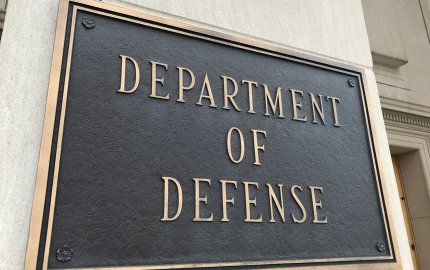


On Dec. 18, 2025, the Department of Defense (DoD) issued deviations to over half of the Defense Federal Acquisition Regulation Supplement (DFARS) Parts, all of which became effective Feb. 1, 2026. Two days later, DoD issued a deviation for DFARS Part 204, which became effective Feb. 17. These deviations reorganize and streamline some of the DFARS regulations and contract clauses that define contractors’ cybersecurity requirements.
Technically, they are “temporary” exceptions to the DFARS that were issued on an emergency basis in
GoPrincipal
Client Alerts
by Adam A. Bartolanzo on December 02, 2025
W.C. Fields once said that there comes a time in everyone’s life when they “must take the bull by the tail and face the situation.” For contractors in the Defense Industrial Base (DIB), that time has apparently come when, at long last, the Cybersecurity Maturity Model Certification (CMMC) Program began its phased rollout Nov. 10.
As previously discussed, Phase 1 sees the incorporation of the new DFARS CMMC clause into all solicitations involving the handling of Federally Controlled Information (FCI) or
GoThe Federal Acquisition Regulatory Council (FAR Council) recently released the rewrite of FAR Part 19, a notoriously complex set of regulations that covers the policies, procedures and programs designed to maximize small business participation in federal contracting. This rewrite is intended to enhance the intuitiveness and ease of applying regulations to small businesses in the federal procurement process. The FAR Council also issued a Practitioner Album, which summarizes proposed changes to the regulations and provides helpful guidance and resources for
GoOn September 10, 2025, the Department of Defense (DoD) issued a Final Rule officially incorporating the Cybersecurity Maturity Model Certification (CMMC) Program into the Defense Federal Acquisition Regulation Supplement (DFARS). The Final Rule establishes the processes for integrating the CMMC requirements into DoD Contracts and Subcontracts and creates two new contract clauses that make CMMC compliance a condition for award. The Final Rule is effective November 10, 2025, which gives entities a brief window of time to familiarize themselves with
Goby Adam A. Bartolanzo on September 12, 2025
The Court of Appeals for the Federal Circuit has resolved once and for all the question of who can file a bid protest before the Court of Federal Claims (COFC).
In Percipient.ai, Inc. v. United States, its Aug. 28 precedential decision, the court – sitting en banc – held that only actual or prospective offerors qualify as “interested parties” under the Tucker Act.
As we previously discussed, a panel of the Federal Circuit ruled in June 2024 that Percipient.ai Inc. had standing to
Goby Adam A. Bartolanzo on September 10, 2025
We previously discussed how the work of the Trump administration’s Department of Government Efficiency (DOGE) is making the decision to protest more critical than ever for offerors, particularly as the end of fiscal year rush to award contracts begins to play out. For awardees, the decision to intervene is just as critically important.
Every contract won is becoming more valuable in relation to what, for many contractors impacted by the DOGE effect, is a waning universe of contracting opportunities. By intervening,
Goby Adam A. Bartolanzo on September 05, 2025
By now, anyone who has had their finger on the pulse of government contracting is keenly aware of the impact the Trump administration’s Department of Government Efficiency (DOGE) has had on acquisitions. As of this writing, DOGE claims the amount of dollars saved because of the 13,000-plus contracts terminated to be greater than $58 billion. And while that figure has been debated and, even if accurate, would represent only a small fraction of the hundreds of billions of dollars the
GoYogi Berra once said, “The future ain’t what it used to be.” Those who have spent a career in federal procurement have seen many cycles of well-intentioned procurement reform instead create a system that is more complex, arcane and inefficient with each iteration.
Any long-serving procurement professional has a bookshelf of Federal Acquisition Regulation (FAR) and Defense Federal Acquisition Regulation Supplement (DFARS) volumes that visibly get thicker with each issue; the current copies are more than twice as thick as the
Goby Mitchell D. Dolman, Adam A. Bartolanzo on April 23, 2025
In a few short weeks, President Donald Trump has issued several executive orders (EOs) that, once implemented, will significantly alter federal procurement. We previously reviewed the EO directing the modernization of defense acquisition processes. Last week, the president issued another EO, “Ensuring Commercial, Cost-Effective Solutions in Federal Contracts,” to fulfill the administration’s goal of eliminating unnecessary and imprudent expenditures of taxpayer dollars by focusing on commercial products and services that provide better, more cost-effective solutions to taxpayers.
This EO directs federal
Goby Mitchell D. Dolman, Adam A. Bartolanzo on April 16, 2025
President Donald Trump signed an executive order April 9, “Modernizing Defense Acquisitions and Spurring Innovation in the Defense Industrial Base,” to reform the United States’ “antiquated defense acquisition processes.” The EO is intended to rectify “years of misplaced priorities and poor management” by improving the speed, flexibility and execution of defense acquisitions and eliminate perceived waste and inefficiency.
The plan also would modernize the duties of the defense acquisition workforce and incentivize and reward personnel for risk-taking and innovation. Given the
Goby Adam A. Bartolanzo, Kathryn J. Carlson on December 27, 2024
President Joe Biden signed into law last week the Servicemember Quality of Life Improvement and National Defense Authorization Act for Fiscal Year 2025 (NDAA). This defense policy and budget bill contains a discretionary topline of $895.2 billion to be split between the Department of Defense (DoD), Department of Energy (DOE) and other agencies for national defense related spending.
The NDAA is a critical piece of legislation that guides the creation of many federal procurement regulations, and this year is no different.
Goby Adam A. Bartolanzo on December 05, 2024
The Court of Appeals for the Federal Circuit last month granted the Government’s petition for rehearing en banc of the precedent-setting decision in Percipient.ai, Inc. v. United States. A divided panel of the Federal Circuit held in June that a prospective subcontractor had standing to challenge the Government’s alleged failure to adhere to the statutory preference for commercial items.
The decision thus expanded the definition of “interested party” under the Tucker Act much more broadly than previous decisions of the Federal
Goby Adam A. Bartolanzo, Kathryn J. Carlson on November 27, 2024
The Federal Acquisition Regulatory (FAR) Council issued an interim rule earlier this month revising FAR 52.204-7 to require offerors to be registered in System for Award Management (SAM) at two points in time: “[1] when submitting an offer or quotation and [2] at time of award.” The interim rule clarifies that offerors are not required to be continuously registered in SAM between those two dates, which is how decisions by the Government Accountability Office (GAO) and the Court of Federal
GoThe Department of Defense (DoD) published a Final Rule earlier this month formally implementing the Cybersecurity Maturity Model Certification (CMMC) Program. This Final Rule is the culmination of five years of work to standardize the safeguards that government contractors must implement to protect Federal Contract Information (FCI) and Controlled Unclassified Information (CUI) while also bolstering compliance with these requirements.
(For more background on the road to the Final Rule, please read our earlier blog posts on what we’ve called “CMMC Program
Goby Adam A. Bartolanzo on June 17, 2024
The Court of Appeals for the Federal Circuit (CAFC) continues to redefine the Court of Federal Claims’ (COFC) ability to hear cases affecting all stages of the federal procurement process.
Last year alone witnessed decisions in which the CAFC established the Tucker Act’s “interested party” analysis as a matter of statutory standing only, recharacterized its long-standing waiver rule for solicitation defects as a non-jurisdictional claims-processing rule and rejected the notion that the Contract Disputes Act’s “sum certain” requirement could be used
Goby Adam A. Bartolanzo on April 09, 2024
Companies competing for federal contracting opportunities now have yet another reason to fear their proposals being rejected and their awards getting overturned.
A recent decision by the Government Accountability Office (GAO) held that continuous registration in the System for Award Management (SAM) is mandatory throughout the evaluation period for an offeror to be eligible for award, even if a period of lapsed registration is as short as 24 hours. If that were not concerning enough, GAO is not alone in its
Goby Stephen P. Ramaley, Adam A. Bartolanzo on January 03, 2024
Any acquisition involving a small business government contractor comes with a host of questions concerning what effect, if any, the transaction may have on the small business’s size and status post-closing. Will a firm that certifies as small or for a particular small business socioeconomic status (Woman Owned Small Business, Service Disabled Veteran Owned Small Business (SDVOSB), etc.) pre-closing keep its status even after the deal? In many cases, no.
This potential reality leads to more questions. What will become of
Go