

Senior Counsel

Client Alerts 

PFAS Reporting Deadlines Extended Once Again
Administrator Lee Zeldin released a pre-publication notice April 8 advising that the Environmental Protection Agency is again delaying the start date for reporting and recordkeeping requirements under the Perfluoroalkyl and Polyfluoroalkyl (PFAS) Reporting and Recordkeeping Rule. The PFAS Reporting Rule is an all-encompassing new regulation that applies to any entity that has manufactured or imported PFAS for a commercial purpose at any time between 2011-2022. Utilities, manufacturers, wholesale traders and waste management and remediation services are most likely to be affected,
Go
Federal Trade Court Strikes Down Bulk of Trump Tariffs
by Karl W. Means, Russell V. Randle on May 29, 2025
A three-judge panel of the United States Court of International Trade late Wednesday afternoon struck down the reciprocal tariffs imposed last month by the Trump administration. The court, in a per curiam decision, held that the powers delegated to the President under the International Emergency Economic Powers Act of 1977 (IEEPA) do not confer the “unbounded authority” to “impose unlimited tariffs on goods from nearly every country in the world.” V.O.S. Selections, Inc., et al. v. United States, No. 25-00066
Go
Left Out of ‘Liberation Day’: Demystifying Continuing Import Sanctions and Tariffs on Russia
by Karl W. Means, Russell V. Randle on April 25, 2025
President Donald Trump issued an executive order (EO) earlier this month announcing sweeping “reciprocal” tariffs on imports from countries across the world. One country missing from the EO’s increased tariffs was Russia, despite its ongoing trade surplus with the United States. In response to the scrutiny this has drawn, the White House offered existing U.S. sanctions on Russia as the basis for its exclusion. While the EO’s more substantial “reciprocal” tariffs are currently suspended (except for China), these discussions raise the
Go
The Mandatory Federal Reporting Requirement on Foreign Ownership of U.S. Businesses Few Know About
Many U.S. enterprises and U.S. real estate holdings have some degree of foreign ownership. Federal law requires the filing of detailed reports on foreign ownership every five years by U.S. enterprises “in which a foreign person . . . owned or controlled, directly or indirectly, 10 percent or more of the voting securities in an incorporated U.S. business enterprise, or an equivalent interest in an unincorporated business enterprise.” 15 C.F.R. part 801.10(b). The U.S. government expects this requirement to apply
Go
With U.S. EPA’s Approval of ASTM E1527-21, a Revised Standard for Environmental Site Assessment Should Be Used
by Russell V. Randle on January 24, 2023
The U.S. Environmental Protection Agency (“U.S. EPA”) has revised the standards by which real property purchasers, lessees and environmental professionals should conduct a Phase I Environmental Site Assessment (“Phase I ESA”). Compliance with the new rule matters because failure to follow the new standard may cost a client the protection of important legal defenses to Superfund claims for past contamination discovered after the transaction closes. The agency has taken final action to amend the standards for conducting an All Appropriate Inquiries
Go
U.S. EPA Takes 3 Big Steps to Tighten Controls on PFAS Chemicals
by Russell V. Randle on January 19, 2023
Close up of United States Environmental Protection Agency sign on building.
In the past few months, the U.S. Environmental Protection Agency (U.S. EPA) has done three significant things to tighten controls on per- and polyfluoroalkyl substances (PFAS). I.  Proposing to List PFAS as ‘CERCLA Hazardous Substances’ The first measure to increase transparency around when and how these ubiquitous chemicals are being released into the environment was proposing to list PFAS as hazardous substances under the Comprehensive Environmental Response, Compensation, and Liability Act (CERCLA), also known as Superfund. Among CERCLA’s many regulatory requirements,
Go
U.S. EPA’s Proposed Chemical Release Reporting Change Could Affect Many Facilities
by Russell V. Randle on December 23, 2022
Close up of United States Environmental Protection Agency sign on building.
The U.S. Environmental Protection Agency (U.S. EPA) recently proposed to change annual chemical release reporting requirements for industrial facilities that manufacture, process or otherwise use even very small quantities of per- and polyfluroalkyl substances (PFAS). The U.S. EPA aims to designate PFAS as “chemicals of special concern” under the Emergency Planning and Community Right-to-Know Act (EPCRA), 42 U.S.C. §11001 et seq. (1986) and the Pollution Prevention Act (PPA), 42 U.S.C. §13101 et seq. (1990). The practical consequence is to eliminate
Go
A Big Verdict Against an EtO Sterilizer as U.S. EPA’s Proposed Rule Takes Shape
by Russell V. Randle on December 19, 2022
Two Models of ethylene oxide and the chemical formula.
We summarized in July the status of ethylene oxide (EtO) federal regulation and litigation risks facing companies using EtO. Since then, two personal injury jury trials claiming damages from EtO exposure have concluded – one with a large plaintiff’s verdict, one for the defense. Both cases, tried in Cook County (Illinois) Circuit Court, claimed that EtO emissions harmed people who lived near Sterigenics’ now-closed Willowbrook, Illinois, commercial sterilization facility. These cases, among many other that have been filed, began in 2018
Go
The District Takes Significant Steps Toward Reducing Greenhouse Gas Emissions
by Russell V. Randle on September 14, 2022
A building under construction.
District of Columbia Mayor Muriel Bowser signed two significant pieces of legislation recently to build on the success of the Clean Energy DC Omnibus Act of 2018 and to further help transition the District to a new energy future. Both acts build on and accelerate the District of Columbia’s commitment to obtaining renewable energy and becoming a better environmental steward. The first piece of legislation is the Climate Commitment Act of 2022 (A24-0527) (the “Climate Commitment Act”). The Climate Commitment Act
Go
Companies That Use and Emit Ethylene Oxide Should Be Aware of Upcoming Regulatory Action and Litigation Risks
by Russell V. Randle on July 21, 2022
In our earlier post, Public and Regulatory Attention to Forever Chemicals is at an All-Time High, we discussed the expected and upcoming regulation of per- and polyfluoroalkyl substances (“PFAS”). Another chemical expected to see further federal regulation and enforcement action that should be on the radar of many companies is ethylene oxide (EtO). EtO is a flammable, colorless gas that is used to sterilize equipment and products that cannot be otherwise sterilized using steam or extreme heat, such as medical components,
Go
Where Does ESG-Related Disclosure Reporting Stand?
Three small wooden blocks on grass. The block on the left has a black E and the word environmental. The block in the middle has an S and the word social. The last block has a G and the word Governance.
Our earlier blog post, “Companies Should Know Benefits and Risks of ESG Reporting,” provided an overview of the Environmental, Social and Governance (“ESG”) metrics, why these metrics are important to companies and shareholders, and what some of the risks are of reporting ESG goals and the results of ESG improvement initiatives. Not surprisingly, over the last few months, it has become even more apparent that ESG initiatives are not just a “flash in the pan.” Companies should treat ESG as
Go
Environmental Due Diligence Requires Reporting of Oil Contamination to the Maryland Department of the Environment
Chemicals on the ground next to a drain.
In a significant regulatory change that will impact real property transactions and loan financings, the Maryland Department of the Environment (MDE) joins a handful of states that requires the reporting of historical petroleum contamination above applicable cleanup standards or action levels if discovered or detected while conducting environmental due diligence investigations. The revised regulation at COMAR 26.10.08.01.B took effect on June 13, 2022. The regulation now imposes upon the environmental consultant or person conducting an environmental site assessment and/or the owner of
Go
Public and Regulatory Attention to Forever Chemicals Is at an All-Time High
Network of tubes and pipes in a factory.
Per- and polyfluoroalkyl substances (“PFAS”) are everywhere these days. And not just in consumer products that we use every day or in drinking water and soils, but also in the news. This is because the science around PFAS tells us that these “forever chemicals” represent an emerging concern. The short-term and long-term risks are still being evaluated, but studies show that exposure at certain concentrations can be detrimental to human health and the environment. The evolution of laboratory techniques so
Go
Recent Court Decisions Demonstrate that a Non-Compliant Phase I ESA May Jeopardize a Real Property Purchaser’s Defense Status
by Russell V. Randle on March 23, 2022
Person holding a clipboard with a blank safety checklist attached and a pen in the other hand preparing to write.
It is standard practice today for real property purchasers to conduct an Environmental Phase I Environmental Site Assessment (“Phase I ESA”) or otherwise satisfy the All Appropriate Inquiries (“AAI”) requirement “in accordance with generally accepted good commercial and customary standards and practices” prior to completing a property transaction. Fulfilling the AAI requirement helps real property purchasers to qualify for certain defenses to liability for cleanup costs under the Comprehensive Environmental Response, Compensation, and Liability Act (“CERCLA”) as a contiguous, bona
Go
Lead Contamination Remains a Significant Issue at Outdoor Shooting Ranges, Prompting Environmental Law Citizen Suits
by Russell V. Randle on March 17, 2022
An empty shooting range.
Spent lead ammunition at outdoor shooting ranges remains a significant environmental topic, as accumulated lead can pose a threat to human health and the environment if best management practices are not implemented in a timely fashion to minimize the impact. Lead contamination is a known issue in the shooting community, remains an issue at ranges in many states, and has resulted in several recent major, sometimes multi-million dollar, remediation efforts. In 2021, the owners and operators of a Maryland shooting
Go
Review of the Current Sanctions and Export Controls on Russia as Military Advances through Ukraine
by Russell V. Randle, Karl W. Means on March 03, 2022
Ukraine flag on a flagpole.
Highlights This Miles & Stockbridge alert provides a summary of the latest sanctions and developments regarding the ongoing situation in Ukraine. In response to Russia’s continued war operations and military attacks throughout Ukraine, the U.S. government and its allies imposed many more sanctions and new export control restrictions in the past week, specifically targeting Russian financial institutions, Russian state-owned enterprises, Russian elites,  and several of Russia's critical industrial sectors. In response to the Russian invasion and continued war operations throughout Ukraine, the U.S.
Go
Final Rule Adds Sweeping Restrictions on Exports to Russia in Response to Further Invasion of Ukraine
by Russell V. Randle, Karl W. Means on February 25, 2022
Yesterday (February 24th) as part of the broader response to Russia’s invasion of Ukraine – the White House announced strict export controls as part of the Biden Administration’s strategy to “squeeze Russia’s access to finance and technology for strategic sectors of its economy for years to come.” (President Biden’s remarks are found here.)  Those controls are part of a Final Rule “Implementation of Sanctions Against Russia Under the Export Administration Regulations (EAR)” (unpublished PDF version is found here) which, although
Go
Proposed CFIUS Regulations Sweep in Foreign Investment in Real Estate Transactions; Comments Due October 17
by Russell V. Randle on September 30, 2019
Banks, builders, developers and all those active in commercial real estate, particularly in Maryland, D.C., and Virginia, should be closely following proposed new Treasury Department rules governing foreign investment in real estate. Those rules may greatly complicate commercial real estate transactions in these states, especially transactions in real property near military installations.   Depending on the final wording of certain key provisions, these rules may sweep in far more transactions than Congress or the Treasury Department intended, transactions without any plausible
Go
Superfund and Natural Resource Damages Litigation
by Russell V. Randle on May 29, 2019
The American Bar Association’s 2018 Year in Review Chapter for Superfund and Natural Resources Damages Litigation is posted here, summarizing key cases and legislative developments under the Superfund law for environmental practitioners. Key developments include rule changes for reporting releases of agricultural emissions, claims against government contractors for problems during cleanups, medical monitoring claims arising from superfund sites, and developments related to financial assurance requirements for ongoing operations. Russ Randle, principal here at Miles & Stockbridge, prepared this chapter together with John Barkett
Go
Hard Rock Dollars: DC Circuit Arguments on Superfund Financial Assurance Rules
by Russell V. Randle on March 18, 2019
Although most basic questions under the federal “Superfund” law have long since been addressed in detail by the federal EPA and the federal courts, Section 108 -- Superfund’s “financial assurance provision” -- is only now coming into legal focus as the U.S. Court of Appeals for the D.C. Circuit considers challenges to EPA’s regulatory decisions under that provision of the Comprehensive Environmental Response, Compensation and Liability Act (CERCLA).   On Wednesday, March 13, 2019, the D.C. Circuit heard oral argument in
Go
The BEA-120 Mandatory Survey of Intellectual Property and Professional Services: June 29th Deadline for U.S Entities That Sold, Purchased or Licensed IP or Professional Services Abroad During 2017
by Russell V. Randle, Karl W. Means on May 08, 2018
For a U.S. person or business that sold to, or bought from, a foreign business or person $500 or more in certain services or intellectual property (“IP”) during the U.S. entity’s fiscal year ending in 2017, June 29, 2018 is the general filing deadline for submitting to the U.S. Department of Commerce, Bureau of Economic Analysis (“BEA”), a mandatory economics survey (Form BE-120). The Form BE-120 is a once-every-five-years survey conducted by BEA, titled “Benchmark Survey of Transactions in Selected
Go
May 31 Is a Mandatory Filing Deadline For a Report to the U.S. Government No One Knows About. Welcome to Form BE-12.
by Russell V. Randle, Karl W. Means on April 05, 2018
For a U.S. business enterprise that has or recently had 10% foreign ownership, May 31, 2018 is an important filing date. That Thursday is the general reporting deadline for submitting to the U.S. Department of Commerce, Bureau of Economic Analysis (“BEA”), a mandatory survey (Form BE-12) which details the extent of foreign investment in a U.S. business, or U.S. affiliate/division of a foreign business. This “benchmark” survey occurs every five years. Many U.S. companies do not know or have forgotten about
Go
EPA Guidance Documents Are Not Enforceable Rules Says DOJ
by Russell V. Randle on February 13, 2018
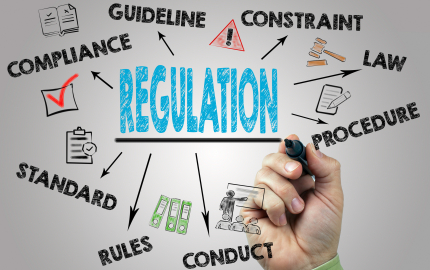
A brainstorm from the word regulation. A hand with a marker preparing to write ideas.
Companies regulated by the Environmental Protection Agency (EPA) have long complained that EPA too often uses guidance documents improperly, both to expand regulatory requirements beyond what the law permits and to avoid judicial review of such expansions. Moreover, regulated parties often argue that EPA rigidly enforces such guidance as binding federal rules, but ignores such guidance when it likes. Without expressly referencing EPA, the Department of Justice (DOJ) has now taken action that will make it harder for such alleged
Go
EPA Deletes Several Superfund Sites from the NPL and Targets More in 2018 and Beyond
by Russell V. Randle on January 10, 2018
U.S. Environmental Protection Agency (EPA) Administrator Scott Pruitt says that expediting cleanups at Superfund sites is one of his top priorities. Since 1980, EPA has had the authority to clean up contaminated sites and force parties responsible for the contamination to either perform cleanups or reimburse the government for EPA-led cleanup work through the Superfund program, also known as the Comprehensive Environmental Response, Compensation, and Liability Act (CERCLA).   According to EPA’s website, as of November 2017, 1,736 sites have been placed
Go
EPA Takes Initial Step to Replace Clean Power Plan
by Russell V. Randle on December 22, 2017
Uncertainty and speculation have swirled over the last few months regarding whether U.S. Environmental Protection Agency (EPA) Administrator Scott Pruitt would replace the Clean Power Plan (CPP) after proposing to repeal the plan in October. Or would the agency simply move forward with repeal without a replacement regulation? Administrator Pruitt has hinted at a replacement rule in interviews and in prepared remarks, but on Monday, the EPA provided the best evidence yet that the agency may be moving to replace
Go
Blessed (Financial) Assurance: EPA Changes Superfund Direction
On Friday, December 1, 2017, the U.S. Environmental Protection Agency (EPA) decided NOT to finalize rules to require hard rock mines and mineral processing operations to provide financial assurance to fund future cleanups of their properties under the federal Superfund law (Comprehensive Environmental Response, Compensation and Liability Act (CERCLA)). A link to EPA’s action can be found here. What a Difference a Year Can Make: Brief History of the Rule from Proposal to EPA’s Decision Not to Finalize Exactly a year before, EPA
Go