

Category: Construction 

OMB Issues Final Guidance for Buy America Preference
Almost a year to the day after the Build America Buy America Act (BABA) became law, the federal Office of Management and Budget (OMB) has published its “Final Guidance for Grants and Agreements” intended to implement BABA’s domestic content preference requirements (88 FR 57750, Aug. 23, 2023). BABA and Prior OMB Guidance BABA was enacted last August as part of the Infrastructure Investment and Jobs Act (IIJA) (see sections 7091-70927, Pub. L. 117-58, 135 Stat 429). It imposes Buy America preferences for
Go


OMB’s Proposed Rule for BABA Implementation Attracts Industry Criticism
The White House Office of Management and Budget (OMB) issued a Proposed Rule and Notification of Proposed Guidance to federal agencies earlier this year regarding the implementation of the Build America, Buy America Act (BABA), which imposes a government-wide preference for domestically produced iron and steel, manufactured products, and construction materials in federal infrastructure projects. The Proposed Rule builds upon the White House guidance for BABA released in April 2022. Although confusingly styled as “guidance,” the Proposed Rule proposes definitions
Go
The District Takes Significant Steps Toward Reducing Greenhouse Gas Emissions
by Russell V. Randle on September 14, 2022
A building under construction.
District of Columbia Mayor Muriel Bowser signed two significant pieces of legislation recently to build on the success of the Clean Energy DC Omnibus Act of 2018 and to further help transition the District to a new energy future. Both acts build on and accelerate the District of Columbia’s commitment to obtaining renewable energy and becoming a better environmental steward. The first piece of legislation is the Climate Commitment Act of 2022 (A24-0527) (the “Climate Commitment Act”). The Climate Commitment Act
Go
Update: SCOTUS Allows Atlantic Coast Pipeline to Cross Appalachian Trail
July 07, 2020
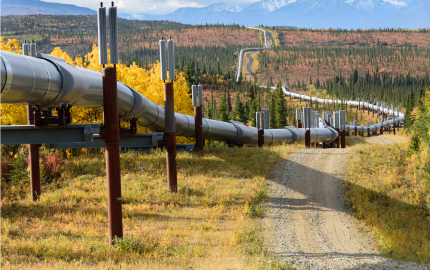
Above ground oil pipeline
Update: The two energy companies constructing the Atlantic Coast Pipeline have abandoned their six-year bid to build it. Despite the recent US Supreme Court win we discuss below, the companies cite high costs and regulatory uncertainty behind their decision to discontinue the project. The Atlantic Coast Pipeline is a planned $8 billion, 600-mile natural gas pipeline from West Virginia to North Carolina. Petitioner Atlantic Coast Pipeline, LLC seeks to build the pipeline, which would traverse 21 miles of national forests and
Go
Don’t Underestimate the Force (Majeure)…and Be Sure You Understand It!
by Jeremy S. Scholtes on June 15, 2020
With the onset of COVID-19, there is increased attention on force majeure clauses – what they are, when they can be invoked, how they operate, and how they might change in the future. This is especially true in construction matters, where many projects have been delayed, often due to some combination of the following: government regulations and executive orders implementing quarantines, stay-at-home orders, or other restrictions; decreased workforce due to illness; unavailability of goods and materials; loss of access to
Go
Preparing for Government Investigations in Wake of PPP Loan Certifications
by Holly Drumheller Butler on June 11, 2020
The U.S. Department of Justice (“DOJ”) is scrutinizing borrowers who have applied for loans through the Small Business Administration’s Paycheck Protection Program (“PPP”), established by the Coronavirus Aid, Relief, and Economic Security Act (“CARES Act”). To date, the DOJ has filed charges in seven separate cases against defendants accused of fraud in connection with PPP loans, and the number of charges continue to grow. These charges demonstrate the Government’s strong intent to claw back any loan proceeds which were obtained
Go
Construction Executives Should Reflect On Disclosure Duties Owed To Bonding Companies
May 27, 2020
As MGT Construction 1 executives start pleading guilty to conspiracy to commit wire fraud and bank fraud, every construction company executive should reflect on the duties of disclosure owed to their bonding companies. Inadequate disclosures carry a range of legal risks. The legal risk of securing a performance bond without disclosing material facts typically arises through a claim by the bonding company for concealment of material facts. In such claims, the bonding company could request that sufficient collateral be provided to cover the
Go
New Virginia Construction Statute: General Contractors Can Be Liable to Pay Subcontractor’s Employee Wages
May 07, 2020
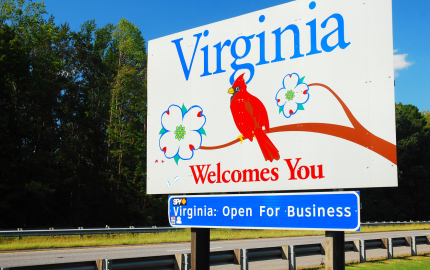
Virginia State Line Welcome Sign
Last month, Virginia’s General Assembly enacted a new law that makes contractors on large construction projects liable for unpaid wages owed to their subcontractors’ employees.  Senate Bill 838, codified at Virginia Code § 11-4.6 and § 40.1-29 has four major effects: It makes the general contractor—and all tiers of subcontractors working on the project—contractually liable to pay their subcontractor’s (at any tier) employees’ wages;  It requires that such payments equal or exceed those required by applicable statutes, such as Virginia’s Minimum Wage
Go
Do Verbal Discussions Trump The Contract’s Written Terms?
April 30, 2020
One of 2019’s most significant construction cases underscores the importance of strictly adhering to a contract’s written terms.  The case resulted from the FBI’s award to a general contractor a construction contract for a large FBI facility.  Part of the project involved fabricating and installing precast concrete panels on an existing parking garage structure.  The general contractor hired a subcontractor to fabricate and install the precast concrete panels. The FBI required the general contractor to verify and accept the existing parking
Go
Atlantic Coast Pipeline Wins Again, Over Nelson County’s Objection
April 23, 2020
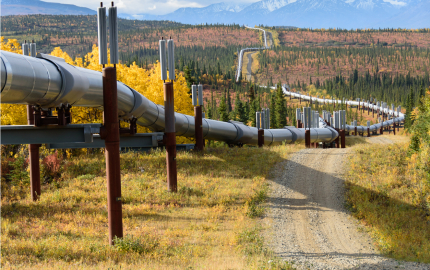
Above ground oil pipeline
Atlantic Coast Pipeline, LLC (“Atlantic”) recently won another battle in its quest to construct an interstate natural gas pipeline across West Virginia, Virginia, and North Carolina.  Twenty-seven of its planned 604 miles traversed Nelson County, Virginia.  Nelson County’s zoning ordinance required a facility used to “transport” hazardous materials across a Special Flood Hazard Area obtain a discretionary variance from the Nelson County Board of Zoning Appeals.  Not wanting the pipeline and contending it would adversely impact its floodplain, the Nelson
Go
Decision from a Montana Federal Court Halts Keystone XL Pipeline with Nationwide Injunction
April 16, 2020
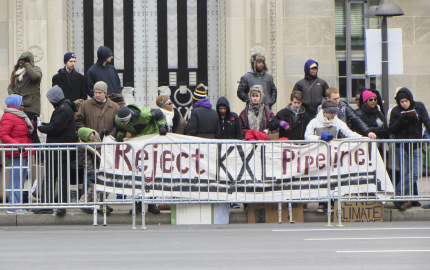
Protesters in Montana behind barricades holding a sign that reads Reject KXL Pipeline.
Last month, the U.S. District Court for the District of Montana granted summary judgment to an environmental group, ruling that the U.S. Army Corps of Engineers violated Section 7(a)(2) of the Endangered Species Act (“ESA”) by failing to formally consult with the U.S. Fish and Wildlife Service or the National Marine Fisheries.  The Court held that the Corps’ re-issuing its Nationwide Permit 12 (“NWP 12”) without complying with the ESA “may affect” protected species or critical habitat. Nationwide permits are available
Go
Force Majeure Clauses and Construction Contract Issues Related to COVID-19
A key tool in mitigating the risks due to unforeseen events is the force majeure clause contained in many commercial and other types of contracts.  In various states, including Maryland, residential and commercial construction companies have been deemed “essential” and may remain open even when a shelter-in-place order has been executed by a state’s Governor.  So how will COVID-19 affect construction contracts and, in particular, will a force majeure clause contained in a construction clause provide any relief should delays
Go