

Category: Manufacturing 

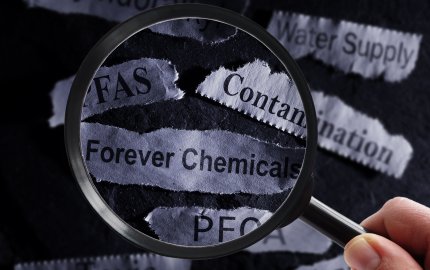
Maryland PFAS Bill Withdrawn: Why Companies Should Still Be Paying Attention
by Matthew T. Wagman on May 04, 2026
Maryland lawmakers failed to pass legislation during the recent General Assembly session that would have implemented sweeping changes to the use in Maryland of polyfluoroalkyl substances (PFAS), also known “forever chemicals.” House Bill 1022, which was withdrawn before the end of the legislative session, would have, among other measures: Expanded product bans for specified consumer products that contain intentionally added PFAS chemicals Required manufacturers to register their products that contain intentionally added PFAS chemicals with the Maryland Department of the Environment by Jan.
Go
Highlights from the 3rd Annual Hot Topics in Health Care Event
by Lisa C. Keenan on April 29, 2026
Senior leaders from across the health care industry gathered at The Center Club in Baltimore for last week’s Hot Topics in Health Care program and reception, presented by the Miles & Stockbridge Health Care Group. The event brought together executives from hospitals, physician networks, insurers, digital health companies, regulatory bodies, financial institutions and advisory firms, and featured two fireside chats on key issues reshaping Maryland’s health care landscape, with networking receptions before and after. Molly Ferraioli moderated the first fireside chat,
Go
PFAS Reporting Deadlines Extended Once Again
Administrator Lee Zeldin released a pre-publication notice April 8 advising that the Environmental Protection Agency is again delaying the start date for reporting and recordkeeping requirements under the Perfluoroalkyl and Polyfluoroalkyl (PFAS) Reporting and Recordkeeping Rule. The PFAS Reporting Rule is an all-encompassing new regulation that applies to any entity that has manufactured or imported PFAS for a commercial purpose at any time between 2011-2022. Utilities, manufacturers, wholesale traders and waste management and remediation services are most likely to be affected,
Go
A Guide to the New Tariff Duty Refund Process
by Karl W. Means on April 21, 2026
Following the U.S. Supreme Court’s ruling striking down most of the tariffs imposed by President Donald Trump under International Emergency Economic Powers Act of 1977 (IEEPA), and the Court of International Trade declaration that "every single cent of IEEPA duties that were imposed must be returned,” the question for U.S. Customs and Border Protection (CBP) — and importers — has been how to refund more than $166 billion in IEEPA tariffs collected over 53 million entries filed by over 330,000
Go
What Importers Should Know Now in the Wake of the Supreme Court’s Tariffs Decision
by Karl W. Means on February 23, 2026
The U.S. Supreme Court on Friday struck down most of the tariffs imposed by President Donald Trump under the International Emergency Economic Powers Act of 1977 (IEEPA). But questions remain for importers and others affected by the IEEPA tariffs: How and when will importers receive refunds of IEEPA duties already paid? What will be the impact of the new tariffs announced Friday by the Trump administration? What is the status of the trade agreements negotiated with certain trading partners in response to the
Go
How Importers Can Be Proactive Awaiting the Supreme Court’s Tariff Decision
by Karl W. Means on February 16, 2026
Between now and when its term ends in June, the United States Supreme Court is expected to decide whether global “reciprocal” tariffs imposed by President Donald Trump under the International Emergency Economic Powers Act of 1977 (IEEPA) are unlawful. The much-anticipated decision could come at any time and, no matter the outcome, likely will significantly change the U.S. tariff landscape in both the short- and long-term. Here’s what importers need to know as they wait. How We Got Here The question before
Go
U.S. Continues to Ease and Clarify Restrictions on Syria
by Kathryn J. Carlson on October 02, 2025
The U.S. Departments of Commerce and the Treasury took steps this September to further ease restrictions on Syria following the fall of the Assad regime. In early September, the Commerce Department’s Bureau of Industry and Security (BIS) revised the Export Administration Regulations (EAR) to relax certain export controls on Syria. On September 25, the Treasury Department’s Office of Foreign Assets Control (OFAC) renamed the “Syria-Related Sanctions Regulations” the “Promoting Accountability for Assad and Regional Stabilization Sanctions Regulations,” further clarifying the
Go
U.S. Provides Significant Sanctions Relief for Syria
by Kathryn J. Carlson on May 29, 2025
Less than two weeks after President Donald Trump announced that his administration would lift U.S. sanctions on Syria, the U.S. Departments of the Treasury and State took significant first steps to provide the anticipated sanctions relief. On May 23, the Treasury Department’s Office of Foreign Assets Control (OFAC) issued General License 25 (GL 25), authorizing a broad range of transactions that had previously been prohibited under the Syrian Sanctions Regulations. In parallel, the State Department exercised its authority under the Caesar
Go
Major Turnover at CPSC: Trump Administration Fires Three Democratic Commissioners
The Trump administration continues to bring with it changes in both the staff and politically appointed positions within the U.S. Consumer Product Safety Commission (CPSC). On Thursday and Friday, the three Democratic commissioners of the CPSC were fired, effective immediately. The fired commissioners – Mary Boyle, Richard Trumka Jr. and former CPSC Chair Alex Hoehn-Saric –  have already stated their intent to challenge their dismissals in court. Click here to read a statement from former CPSC Chair Alex Hoehn-Saric that summarizes
Go
Left Out of ‘Liberation Day’: Demystifying Continuing Import Sanctions and Tariffs on Russia
by Karl W. Means, Russell V. Randle on April 25, 2025
President Donald Trump issued an executive order (EO) earlier this month announcing sweeping “reciprocal” tariffs on imports from countries across the world. One country missing from the EO’s increased tariffs was Russia, despite its ongoing trade surplus with the United States. In response to the scrutiny this has drawn, the White House offered existing U.S. sanctions on Russia as the basis for its exclusion. While the EO’s more substantial “reciprocal” tariffs are currently suspended (except for China), these discussions raise the
Go
Highlights from Hot Topics in Health Care Law
April 17, 2025
Executives, general counsel and administrators of hospitals, physician groups, long-term care communities and other health care providers attended last week’s Hot Topics in Health Care Law seminar, presented by the Miles & Stockbridge Health Care Group. The event featured a panel discussion, moderated by Lisa Keenan and Molly Ferraioli, with three industry experts offering their thoughts on the rapidly evolving landscape of health care law: Cathy Hamel, president of Gilchrist Hospice, the largest provider of serious illness, hospice and palliative care
Go
What You Need to Know About Freddie Mac’s Recent Update
Freddie Mac published Thursday an update to the Freddie Mac Guide, which included a discussion of various underwriting, fraud detection and loan document changes. Here's what you need to know. Loan Documents/Legal Matters Most of the changes to the loan documents, including Loan Agreement and Guaranty, are minor and ministerial in nature but widespread. The biggest change is to incorporate the provisions of splitting the note riders to the Loan Agreement and Guaranty directly into the bodies of the documents. This allows Freddie
Go
OMB Issues Final Guidance for Buy America Preference
Almost a year to the day after the Build America Buy America Act (BABA) became law, the federal Office of Management and Budget (OMB) has published its “Final Guidance for Grants and Agreements” intended to implement BABA’s domestic content preference requirements (88 FR 57750, Aug. 23, 2023). BABA and Prior OMB Guidance BABA was enacted last August as part of the Infrastructure Investment and Jobs Act (IIJA) (see sections 7091-70927, Pub. L. 117-58, 135 Stat 429). It imposes Buy America preferences for
Go
OMB’s Proposed Rule for BABA Implementation Attracts Industry Criticism
The White House Office of Management and Budget (OMB) issued a Proposed Rule and Notification of Proposed Guidance to federal agencies earlier this year regarding the implementation of the Build America, Buy America Act (BABA), which imposes a government-wide preference for domestically produced iron and steel, manufactured products, and construction materials in federal infrastructure projects. The Proposed Rule builds upon the White House guidance for BABA released in April 2022. Although confusingly styled as “guidance,” the Proposed Rule proposes definitions
Go
The Mandatory Federal Reporting Requirement on Foreign Ownership of U.S. Businesses Few Know About
Many U.S. enterprises and U.S. real estate holdings have some degree of foreign ownership. Federal law requires the filing of detailed reports on foreign ownership every five years by U.S. enterprises “in which a foreign person . . . owned or controlled, directly or indirectly, 10 percent or more of the voting securities in an incorporated U.S. business enterprise, or an equivalent interest in an unincorporated business enterprise.” 15 C.F.R. part 801.10(b). The U.S. government expects this requirement to apply
Go
D.C. Circuit Strikes Down Some 2019 NLRB Election Rules
January 31, 2023
Person dropping voting ballot in ballot box.
A divided three-judge panel of the U.S. Court of Appeals for the D.C. Circuit ruled earlier this month that the National Labor Relations Board violated the Administrative Procedure Act (APA) in 2019 by issuing certain rules governing union election procedures without seeking public comment. The 2019 Rule – issued by a Trump Board – modified what is colloquially known as the Obama Board’s 2014 “quickie election” rules. The AFL-CIO challenged the 2019 Rule and in 2020, now-Supreme Court Justice Ketanji Brown
Go
Review of the Current Sanctions and Export Controls on Russia as Military Advances through Ukraine
by Russell V. Randle, Karl W. Means on March 03, 2022
Ukraine flag on a flagpole.
Highlights This Miles & Stockbridge alert provides a summary of the latest sanctions and developments regarding the ongoing situation in Ukraine. In response to Russia’s continued war operations and military attacks throughout Ukraine, the U.S. government and its allies imposed many more sanctions and new export control restrictions in the past week, specifically targeting Russian financial institutions, Russian state-owned enterprises, Russian elites,  and several of Russia's critical industrial sectors. In response to the Russian invasion and continued war operations throughout Ukraine, the U.S.
Go
Final Rule Adds Sweeping Restrictions on Exports to Russia in Response to Further Invasion of Ukraine
by Russell V. Randle, Karl W. Means on February 25, 2022
Yesterday (February 24th) as part of the broader response to Russia’s invasion of Ukraine – the White House announced strict export controls as part of the Biden Administration’s strategy to “squeeze Russia’s access to finance and technology for strategic sectors of its economy for years to come.” (President Biden’s remarks are found here.)  Those controls are part of a Final Rule “Implementation of Sanctions Against Russia Under the Export Administration Regulations (EAR)” (unpublished PDF version is found here) which, although
Go
Avoid Turning One Data Breach into Two
by Veronica D. Jackson, Thomas E. Zeno on January 24, 2022
Person sitting on a couch looking at a piece of mail.
When can a data breach can get worse? When the process of notifying victims creates a second breach. Take the example of a cancer treatment center that recently paid $425,000 to settle allegations that included a faulty notification process following a breach. The story provides an important lesson. One Breach Leads to Another It began with a spear phishing attack. Employees at the facility fell victim to the attack and their email accounts were compromised. The result: protected health information and other
Go
Not Too Specific: Personal Jurisdiction After Ford Motor Co. v. Montana Eighth Judicial District Court
by Taylor M. McAuliffe on April 22, 2021
Empty courtroom at the U.S. Supreme court.
The Supreme Court’s latest personal jurisdiction opinion – Ford Motor Co. v. Montana Eighth Judicial District Court – seems to raise more questions than answers regarding the contours of specific jurisdiction. A curious result, given the eight-member panel 1 unanimously agreed that Ford was subject to specific jurisdiction in the forums – Montana and Minnesota – where the underlying suits were filed. Writing for the five-member majority, Justice Kagan reached this conclusion by recognizing that specific jurisdiction may exist where a defendant’s
Go
Md. High Court to Defendants: Don’t Show Up Empty Handed When Using the “Empty Chair” Defense
by Daniel L. Adamson on December 03, 2020
An empty judge's bench with U.S. flag on a flagpole
The “empty chair” defense, where the defendant denies responsibility for the plaintiff’s injuries and blames a person absent from trial (i.e. the “empty chair”), can be extremely effective in tort actions. The Court of Appeals of Maryland has rightly observed that “[t]he more the jury hears that the negligence of a third party caused the injury, the less likely the jury may be to find that the named defendant was negligent in causing the injury.”  Am. Radiology Servs., LLC v.
Go
Dropping an F-Bomb or Uttering a Racist or Sexist Comment in the Workplace May No Longer Be Protected Activity Under the National Labor Relations Act
by Marc K. Sloane on July 28, 2020
On July 21, 2020, the National Labor Relations Board (NLRB) issued a decision in General Motors LLC, 369 NLRB No. 127 (2020) which fundamentally changed the standard for, “determining whether employees have been lawfully disciplined or discharged after making abusive or offensive statements — including profane, racist, and sexually unacceptable remarks — in the course of activity otherwise protected under the National Labor Relations Act” (Act). Prior to its decision in General Motors, the NLRB had established three different setting-specific tests
Go
New Section 232 Investigation into Vanadium Imports
by Karl W. Means on June 05, 2020
Cargo ship maneuvering at dock with a ship full of cargo.
On May 28, 2020, The Secretary of Commerce opened a new investigation to determine the effects on national security from imports of vanadium, pursuant to its authority under Section 232 of the Trade Expansion Act of 1962.  Interested parties are invited to submit written comments, data, analyses, or information pertinent to the investigation, no later than July 20, 2020.  A party potentially impacted in any way – directly or indirectly - by vanadium tariffs should consider submitting comments. Section 232 is
Go
Order Tolling Statutes of Limitations, Other Case Initiating Deadlines, Raises More Questions Than Answers for Maryland Civil Litigants
April 07, 2020
On April 3, 2020, in response to the ongoing COVID-19 pandemic, Chief Judge Mary Ellen Barbera of the Maryland Court of Appeals issued a trio of administrative orders. One of the orders—“Administrative Order on Tolling or Suspension of Statutes of Limitations and Statutory and Rules Deadlines Related to the Initiation of Matters and Certain Statutory and Rules Deadlines in Pending Matters”—is sure to catch the attention, and raise questions, for litigators across the state. What Does the Order Say? Under sections (a)
Go
USTR Seeks Public Comments for Possible COVID-19-Related China Tariff Modifications
March 24, 2020
On March 20, 2020, the United States Trade Representative (USTR) announced that it was accepting public comments on possible modifications to the tariffs imposed on Chinese products as a part of the Section 301 action to address “China’s acts, policies and practices related to technology transfer, intellectual property and innovation.”  See. Although many medical/health-related products were excluded from these tariffs, the USTR is seeking identification of additional products currently subject to the tariffs that may be beneficial to combatting the
Go
Insurance Coverage for COVID-19 Losses: Take a Proactive Approach to Maximize Coverage
Person with their finger on top of a standing domino to prevent the dominos from falling.
As the events surrounding the COVID-19 pandemic unfold, the insurance industry is bracing itself for the multitude of claims it will inevitably face. To maximize potential coverage, policyholders can and should act now to analyze their coverage so that operational decisions can be made with insurance issues in mind. The current economic shutdown is causing losses that will trigger insurance coverage claims under many lines of coverage, including: Business Interruption (BI) Closings and supply chain disruptions are causing losses in virtually every
Go
En Banc Fifth Circuit "Strips Away Confusion" re Government Contractor Removal
February 28, 2020
On February 24, 2020, in Latiolais v. Huntington Ingalls, Inc., the Fifth Circuit joined the Third, Fourth, and Eleventh Circuits in applying the plain language of the revised Federal Officer Removal Statute, 28 U.S.C. § 1442(a)(1).  In doing so, it permitted a government contractor defendant to remove an asbestos-related lawsuit against it to federal court. James Latiolais worked as a machinist aboard the USS Tappahannock and alleged he was exposed to asbestos while the ship underwent refurbishing at government contractor Avondale
Go
Thomas v. Grant: Several Evidence Errors Force Re-Trial
December 04, 2019
Often, trial lawyers minimize the importance of a timely evidentiary objection. Trial lawyers think that appellate courts review evidentiary objections under a deferential “abuse of discretion” standard and that one single such ruling will not overturn the verdict. A recent case shows that this received wisdom may be wrong in certain circumstances. In Thomas v. Grant, the Court of Special Appeals of Maryland vacated the Circuit Court for Prince George’s County’s judgment and remanded for a new trial because the trial
Go
“Almost’ Only Really Counts in Horseshoes and Hand-Grenades…” And Maryland Asbestos Cases
by Taylor M. McAuliffe on July 11, 2019
On July 3, 2019, the Court of Appeals of Maryland affirmed the decision of the Court of Special Appeals in Wallace & Gale Asbestos Settlement Tr. v. Busch, 238 Md. App. 695 (2018), aff’d, No. 58, 2019 WL 2865070 (Md. July 3, 2019). The Court found that the jury reasonably inferred that, based on W&G’s “substantial” presence during the construction of a high school building, W&G was responsible for the asbestos exposure and resulting illness of a plaintiff who worked only in
Go
Should the Jury Be Allowed to Infer Product Identification in Maryland Asbestos Cases?
by Taylor M. McAuliffe on May 20, 2019
On March 4, 2019, the Court of Appeals of Maryland heard oral argument on an appeal from a $7.28 million jury verdict in favor of Plaintiffs William Busch and his wife Kathleen against the asbestos settlement trust established by Wallace & Gale (W&G). Wallace & Gale Asbestos Settlement Tr. v. Busch, 238 Md. App. 695, cert. granted, 462 Md. 84 (2018). In the absence of any direct evidence that W&G used asbestos-containing products at the construction site at issue, the Baltimore County
Go
Maryland’s Court of Special Appeals Rejects Company’s Appeal of Ruling Requiring Discovery of Joint Defense Agreements, Communications With Consulting Witness, and Sealed Insurance Docs
December 11, 2018
On December 6, 2018, in an unreported decision, Maryland’s Court of Special Appeals permitted plaintiffs in product liability litigation in Baltimore City Circuit Court to obtain broad discovery into joint defense agreements, communications between a defendant and its consulting expert, and documents in a sealed insurance litigation.  The Court of Special Appeals permitted such discovery because it found the appeal of the defendant, Union Carbide Corporation (“UCC”), to involve issues not ripe for decision under Maryland’s collateral order doctrine. According
Go
Is Epidemiology Necessary to Establish Causation in Maryland?
August 07, 2018
Does Maryland law require that experts rely upon epidemiology to establish medical causation in a toxic exposures personal injury case? In Sugarman v. Liles, decided on July 31, 2018, the Maryland Court of Appeals strongly implied that this was so, which may have fundamental implications for toxic tort cases going forward in the state.  No. 80, Sept. Term, 2017, 2018 WL 3642143 (Md. July 31, 2018).   The Court of Appeals in Sugarman wrestled with whether a pediatrics and childhood lead poisoning expert witness in
Go
Maryland Continues “Drift” Toward Daubert
March 19, 2018
Is Maryland drifting toward Daubert? The Court of Special Appeals of Maryland seemed to confirm (or re-confirm) this as recently as in Sissoko v. State. There, the Court of Special Appeals determined that the trial court properly admitted expert testimony from prosecutors about abusive head trauma in infants.   A quick refresher on Daubert: under Federal Rule of Evidence 702, a court will look at the following factors to determine whether scientific testimony (i.e., both methodology and conclusions) is reliable: (1) whether the technique has been
Go
MD DLLR Provides New Information on Healthy Working Families Act
by Marc K. Sloane on March 16, 2018
The DLLR recently issued new guidance concerning the Maryland Healthy Working Families Act for employers. The new guidance takes the form of sample policies and updated or new responses to the previously posted frequently asked questions. The new guidance is helpful and may answer some of the questions employers face as they implement the Act. The new guidance may be found here. The sample policies address three different scenarios: (i) an employer that awards sick and safe leave at the beginning of
Go
Product Liability Issues of Today’s Direct Sales Industry
by Susan DuMont on March 02, 2018
Anyone with a social media account has likely recently seen a friend start a side-hustle selling products to their network through a direct sales company. The direct sales industry has experienced a renaissance since the Great Recession and shows no sign of slowing down. Direct sales companies have changed the way many people buy and sell products, and they have allowed many sellers to engage in potentially lucrative work with great flexibility. But are these sellers opening themselves up to
Go
Maryland’s Court of Appeals to Decide Whether Statute of Repose Defense Applies in Asbestos Litigation
January 30, 2018
On December 1, 2017, the Court of Appeals of Maryland heard arguments on an appeal from a decision holding that the state’s 20-year statute of repose bars asbestos claims that accrue after the enactment of the asbestos manufacturer exemption of 1991. Duffy v. CBS Corp., 232 Md. App. 602, cert. granted, 456 Md. 53 (2017).   The statute of repose limits liability for injuries which occur from “the defective and unsafe condition of an improvement to real property.”  MD. CODE ANN., CTS.
Go
Confirmation from Pennsylvania Superior Court: The Fair Share Act Applies to Strict Liability Cases Involving Asbestos Exposure
January 26, 2018
As a matter of first impression, the Pennsylvania Superior Court recently held that the Fair Share Act applies to strict liability cases involving asbestos exposure. In Roverano v. John Crane, Inc., 2017 PA Super. 415 (Dec. 28, 2017), a three-judge panel concluded that “the Fair Share Act explicitly applies to tort cases in which recovery is allowed against more than one person, including actions for strict liability.” Ultimately, the Superior Court vacated the trial court’s judgment and remanded the case for
Go
Third Circuit Latest to Hollow Out Bright Line Bare Metal Defense
January 05, 2018
On October 3, 2017, the United States Court of Appeals for the Third Circuit held—in a case of first impression—that a manufacturer of a “bare metal” product may be liable for a plaintiff’s injuries caused by later added asbestos-containing materials. Roberta G. Devries and Shirley McAfee were widows of husbands who served in the United States Navy. Each filed a Complaint against a group of manufacturers alleging that their husband contracted cancer as a result of asbestos exposure. Devries alleged that
Go
Personal Jurisdiction Defense Gaining Traction in Mass Tort Litigation
November 15, 2017
For the past several years the United States Supreme Court has sought to clarify the proper exercise of specific personal jurisdiction over foreign corporate defendants. This issue is particularly applicable in mass tort litigation where out-of-state plaintiffs are often grouped together with in-state plaintiffs for a consolidated trial setting. The Supreme Court addressed that concern in the groundbreaking decision Bristol-Myers Squibb Co. v. Superior Court, 137 S.Ct. 1773 (2017). In Bristol-Myers, the Supreme Court ultimately held that state courts could not circumvent the
Go
Baltimore City Asbestos Docket Dilemma Comes to a Head in Annapolis
October 24, 2017
Many plaintiffs consider the Circuit Court for Baltimore City to be the asbestos capital of the Maryland courts. After all, the City has its own asbestos litigation rules, docket procedures, and even its own electronic filing system for asbestos cases. Specifically, since 1987, litigants have filed suits and handled discovery and trial dates under a Master Order docketed by the late Judge Marshal A. Levin. In the years following Judge Levin’s Order, plaintiffs’ attorneys have filed tens of thousands of cases
Go
CPSC Initiates Rulemaking to Ban Some Flame Retardants
by Timothy L. Mullin, Jr. on October 02, 2017
In 2015, a group of consumer groups filed a petition with the U.S. Consumer Product Safety Commission (“CPSC”) seeking to ban under the Federal Hazardous Substances Act the use of non-polymeric organohalogen flame retardants (“ORF”) from children’s products, furniture, mattresses and cases surrounding electronics. The petitioners assert that ORFs migrate from the products and create adverse health effects. CPSC staff reviewed the petition, and recommended rejecting it, concluding that there was insufficient data supporting the health risks asserted in the petition. Despite
Go
U.S. Supreme Court Clarifies Constitutional Limits on Specific Jurisdiction Over Foreign Defendants…Again
September 25, 2017
Since 2011, the U.S. Supreme Court has continued to roll back the expansion of personal jurisdiction by lower courts and has set more limitations on where a plaintiff can sue corporate defendants. We have  watched this unfold in the Court’s rulings in Goodyear Dunlop Tires Operations, S.A. v. Brown, 564 U.S. 915, 924-929 (2011) and the seminal case Daimler AG v. Bauman, 134 S.Ct. 746 (2014). On June 19, 2017, the Supreme Court further rolled back jurisdictional expansion in Bristol-Myers Squibb Co. v.
Go
Impact of the FOIA Amendments on your Company
by John C. Celeste on August 10, 2017
For those of you who have received a Freedom of Information Act (“FOIA”) notice from the U.S. Consumer Product Safety Commission (“CPSC” or “Commission”) within the past year, you may – or worse, may not – have noticed new disclosure language. As most of you know, the CPSC has unique regulations that govern its public disclosure of information. Specifically, Section 6(b) of the Consumer Product Safety Act (“CPSA”) prohibits the Commission from disclosing information about a consumer product that identifies
Go
Court of Special Appeals Affirms Admission of Plaintiff’s Medical Records into Evidence to Support Opinions of Defense Expert
by Glenn A. Gordon on July 13, 2017
A recent holding of the Court of Special Appeals of Maryland is of significance to companies defending personal injury lawsuits—particularly those where the nature or extent of a plaintiff’s alleged injuries is in dispute. In Lamalfa v. Hearn, No. 87, Sept. Term 2016 (Md. Ct. Spec. App. June 28, 2017), the Court of Special Appeals affirmed a trial judge’s decision to admit copies of four of the plaintiff’s medical records into evidence during the testimony of the defendant’s expert witness, pursuant
Go
The Supreme Court Clarifies Patent Rights After a Patented Item is Sold
by Ajay A. Jagtiani on June 23, 2017
On May 30, 2017, in Impression Products 1, the U.S. Supreme Court ruled that a patent owner’s sale of an item, either within or outside the United States, exhausts all of the patent owner’s patent rights in that item, regardless of any restrictions the patentee purports to impose upon the sale. This Court’s decision solved long-term unsettled issues with respect to patent owners’ post-sale restrictions on the use or resale of patented items. Over the years, disputes have arisen with respect to the
Go
Significant Changes to Consumer Product Safety Commission Expected Under New Administration
June 19, 2017
The U.S. Consumer Product Safety Commission (“CPSC”) is an independent federal agency that administers the Consumer Product Safety Act (“CPSA”), 15 U.S.C. §§ 2051-2089, and has authority to seek civil penalties for alleged violations of the CPSA. Under the terms of the CPSA, five Commissioners make up the CPSC. The current group of Commissioners includes three Democrats and two Republicans; however, the term of one of the Democrats, Commissioner Marietta Robinson, expires in October 2017. A new Commissioner will thereafter
Go
Maryland Court of Special Appeals Says No Breach of Contract Claim Unless Doctor Makes Special Promise Regarding Medical Treatment
June 13, 2017
In a decision handed down on April 27, 2017 in the case of Heneberry v. Pharoan, the Maryland Court of Special Appeals rejected a breach of contract claim against a doctor who failed to completely perform a surgical procedure. 1 Valerie Heneberry (“Heneberry”) filed her Complaint in the Circuit Court for Baltimore County, alleging that Bashar Pharoan (“Dr. Pharoan”), in performing an appendectomy for acute appendicitis, failed to completely remove her appendix in contravention of his agreement to perform an appendectomy. Heneberry claimed
Go
Supreme Court to Consider Whether Allegations of Adherence to a Business Association’s Rules Can Trigger Antitrust Liability
by John E. McCann, Jr. on September 15, 2016
Can participation in a business or trade association and allegiance to its rules trigger antitrust liability for association members under the Sherman Act?  Next term, the Supreme Court will hear Osborn v. Visa Inc., the appeal of a 2015 decision of the U.S. Court of Appeals for the District of Columbia Circuit, which held that allegations of members’ participation in the governance of an association and adherence to its rules is sufficient to plead a conspiracy for purposes of Section
Go
FTC Announces Revised HSR Pre-Merger Notification and Interlocking Directorate Thresholds
by John E. McCann, Jr. on February 09, 2016
The Federal Trade Commission (“FTC”) has announced revised monetary thresholds for determining whether companies are required to notify federal antitrust authorities about a transaction under the Hart-Scott Rodino Antitrust Improvements Act of 1976, as amended (the “HSR Act”).  The new thresholds take effect February 25, 2016.  The HSR Act requires the FTC to revise the thresholds annually based on changes in the gross national product.  The FTC also revised the interlocking directorate thresholds under Section 8 of the Clayton Act,
Go
Trade Associations Continue to Invite Antitrust Scrutiny
by John E. McCann, Jr. on August 14, 2014
Trade associations play an important role in promoting both the interests of their members and the industries they serve. Despite their many legitimate activities, however, trade associations have always been and remain subject to the antitrust laws. Trade associations inherently are comprised of competitors, and as recently noted on the FTC’s website, “competitors are expected to compete.” 1 While competitor conduct in the context of association meetings and other events is often the focus of regulatory scrutiny, recent FTC enforcement actions
Go
E-Bay settles Antitrust Actions against “No-Poach” Agreements
by John E. McCann, Jr. on June 09, 2014
On May 1, 2014, tech-giant, E-Bay, Inc. (“E-Bay”) entered a proposed agreement with the United States Department of Justice (“DOJ”) and California antitrust regulators to settle antitrust claims arising out of its “no-poach” agreement with Intuit Inc. (“Intuit”).  The challenged agreement prevented each firm from recruiting employees of the other, and prohibited E-Bay from hiring Intuit employees that approached E-Bay for employment.  Subject to court approval, the proposed settlement with the DOJ enjoins the challenged agreement, and more broadly prohibits
Go
Contributory Negligence, James Coleman v. Soccer Association of Columbia
by Joseph W. Hovermill on July 30, 2013
On July 9, 2013, the Maryland Court of Appeals reaffirmed Harrison v. Montgomery County Board of Education, 295 Md. 442 (1983) and held that contributory negligence will remain the law of Maryland until the General Assembly says otherwise.  The Court of Appeals voted 5-2 not to change the common-law doctrine, citing the Civil War-era precedent and the repeated but failed attempts by the General Assembly to change the rule as strong evidence that contributory negligence is the expressed policy of
Go
Pennsylvania Considering “Leegin- Repealer” Legislation to Restore Per Se Treatment of Resale Price Maintenance
On March 14, 2013 Pennsylvania State Senator Stewart Greenleaf announced that he is reintroducing Senate Bill 1565 which, if enacted, would establish comprehensive antitrust legislation in Pennsylvania. The bill, which stalled in the judiciary committee in 2012, includes a provision that defines “Prohibited Acts” to include “(t)o contract, combine or conspire to establish a minimum price below which a retailer, wholesaler or distributor may not sell a commodity or service.” This prohibition could apply to minimum resale price maintenance (“RPM”)
Go