

Category: Environmental 

Maryland PFAS Bill Withdrawn: Why Companies Should Still Be Paying Attention
by Matthew T. Wagman on May 04, 2026
Maryland lawmakers failed to pass legislation during the recent General Assembly session that would have implemented sweeping changes to the use in Maryland of polyfluoroalkyl substances (PFAS), also known “forever chemicals.” House Bill 1022, which was withdrawn before the end of the legislative session, would have, among other measures: Expanded product bans for specified consumer products that contain intentionally added PFAS chemicals Required manufacturers to register their products that contain intentionally added PFAS chemicals with the Maryland Department of the Environment by Jan.
Go
PFAS Reporting Deadlines Extended Once Again
Administrator Lee Zeldin released a pre-publication notice April 8 advising that the Environmental Protection Agency is again delaying the start date for reporting and recordkeeping requirements under the Perfluoroalkyl and Polyfluoroalkyl (PFAS) Reporting and Recordkeeping Rule. The PFAS Reporting Rule is an all-encompassing new regulation that applies to any entity that has manufactured or imported PFAS for a commercial purpose at any time between 2011-2022. Utilities, manufacturers, wholesale traders and waste management and remediation services are most likely to be affected,
Go
Navigating the New Waters of EPA Enforcement: A Deep Dive into the Strategic Civil-Criminal Enforcement Policy
by Holly Drumheller Butler on June 07, 2024
The Environmental Protection Agency (EPA) chooses criminal, civil or administrative enforcement based on its assessment of the severity of violations. A significant development in EPA’s enforcement strategy has been the increased integration and collaboration between its civil and criminal enforcement offices. To further its enforcement program, the EPA recently introduced the Strategic Civil-Criminal Enforcement Policy. This policy replaces previous guidelines, is effective immediately and according to the EPA aims to address modern environmental challenges more effectively. The key takeaways from this policy
Go
Understanding the Brighter Tomorrow Act: A New Era for Solar Energy Development in Maryland
June 03, 2024
Maryland has long been a solar-friendly state, and the Brighter Tomorrow Act, signed into law by Gov. Wes Moore last month, will expand access and adoption of solar energy. The legislation is both a supportive and forward-looking policy aimed at enhancing sustainability, economic growth and technological advancement within Maryland. Some of the key takeaways from the act are: Creating the Small Solar Energy Generating System Incentive Program by the Maryland Public Service Commission (PSC). The program will allow eligible solar energy generating
Go
With U.S. EPA’s Approval of ASTM E1527-21, a Revised Standard for Environmental Site Assessment Should Be Used
by Russell V. Randle on January 24, 2023
The U.S. Environmental Protection Agency (“U.S. EPA”) has revised the standards by which real property purchasers, lessees and environmental professionals should conduct a Phase I Environmental Site Assessment (“Phase I ESA”). Compliance with the new rule matters because failure to follow the new standard may cost a client the protection of important legal defenses to Superfund claims for past contamination discovered after the transaction closes. The agency has taken final action to amend the standards for conducting an All Appropriate Inquiries
Go
U.S. EPA Takes 3 Big Steps to Tighten Controls on PFAS Chemicals
by Russell V. Randle on January 19, 2023
Close up of United States Environmental Protection Agency sign on building.
In the past few months, the U.S. Environmental Protection Agency (U.S. EPA) has done three significant things to tighten controls on per- and polyfluoroalkyl substances (PFAS). I.  Proposing to List PFAS as ‘CERCLA Hazardous Substances’ The first measure to increase transparency around when and how these ubiquitous chemicals are being released into the environment was proposing to list PFAS as hazardous substances under the Comprehensive Environmental Response, Compensation, and Liability Act (CERCLA), also known as Superfund. Among CERCLA’s many regulatory requirements,
Go
U.S. EPA’s Proposed Chemical Release Reporting Change Could Affect Many Facilities
by Russell V. Randle on December 23, 2022
Close up of United States Environmental Protection Agency sign on building.
The U.S. Environmental Protection Agency (U.S. EPA) recently proposed to change annual chemical release reporting requirements for industrial facilities that manufacture, process or otherwise use even very small quantities of per- and polyfluroalkyl substances (PFAS). The U.S. EPA aims to designate PFAS as “chemicals of special concern” under the Emergency Planning and Community Right-to-Know Act (EPCRA), 42 U.S.C. §11001 et seq. (1986) and the Pollution Prevention Act (PPA), 42 U.S.C. §13101 et seq. (1990). The practical consequence is to eliminate
Go
A Big Verdict Against an EtO Sterilizer as U.S. EPA’s Proposed Rule Takes Shape
by Russell V. Randle on December 19, 2022
Two Models of ethylene oxide and the chemical formula.
We summarized in July the status of ethylene oxide (EtO) federal regulation and litigation risks facing companies using EtO. Since then, two personal injury jury trials claiming damages from EtO exposure have concluded – one with a large plaintiff’s verdict, one for the defense. Both cases, tried in Cook County (Illinois) Circuit Court, claimed that EtO emissions harmed people who lived near Sterigenics’ now-closed Willowbrook, Illinois, commercial sterilization facility. These cases, among many other that have been filed, began in 2018
Go
Montgomery County Expands Scope of Energy Benchmarking Performance Reporting Requirement, Imposes New Information Disclosure Requirement to Prospective Buyers
by Scott C. Wallace on October 27, 2022
The outside of a 5 story apartment building.
Under recent amendments to Montgomery County’s Energy Benchmarking and Performance Standards Law, residential and non-residential buildings in the County - including buildings in Rockville and Gaithersburg - that are 25,000 gross square feet (GSF) and greater must now benchmark and report building profile and energy data to the Montgomery County Department of Environmental Protection. Effective Aug. 1, 2022, these building types must begin reporting to the County per the following schedule: Non-Residential Buildings 25,000 to 50,000 GSF and previously exempted buildings such
Go
The District Takes Significant Steps Toward Reducing Greenhouse Gas Emissions
by Russell V. Randle on September 14, 2022
A building under construction.
District of Columbia Mayor Muriel Bowser signed two significant pieces of legislation recently to build on the success of the Clean Energy DC Omnibus Act of 2018 and to further help transition the District to a new energy future. Both acts build on and accelerate the District of Columbia’s commitment to obtaining renewable energy and becoming a better environmental steward. The first piece of legislation is the Climate Commitment Act of 2022 (A24-0527) (the “Climate Commitment Act”). The Climate Commitment Act
Go
Companies That Use and Emit Ethylene Oxide Should Be Aware of Upcoming Regulatory Action and Litigation Risks
by Russell V. Randle on July 21, 2022
In our earlier post, Public and Regulatory Attention to Forever Chemicals is at an All-Time High, we discussed the expected and upcoming regulation of per- and polyfluoroalkyl substances (“PFAS”). Another chemical expected to see further federal regulation and enforcement action that should be on the radar of many companies is ethylene oxide (EtO). EtO is a flammable, colorless gas that is used to sterilize equipment and products that cannot be otherwise sterilized using steam or extreme heat, such as medical components,
Go
Where Does ESG-Related Disclosure Reporting Stand?
Three small wooden blocks on grass. The block on the left has a black E and the word environmental. The block in the middle has an S and the word social. The last block has a G and the word Governance.
Our earlier blog post, “Companies Should Know Benefits and Risks of ESG Reporting,” provided an overview of the Environmental, Social and Governance (“ESG”) metrics, why these metrics are important to companies and shareholders, and what some of the risks are of reporting ESG goals and the results of ESG improvement initiatives. Not surprisingly, over the last few months, it has become even more apparent that ESG initiatives are not just a “flash in the pan.” Companies should treat ESG as
Go
Environmental Due Diligence Requires Reporting of Oil Contamination to the Maryland Department of the Environment
Chemicals on the ground next to a drain.
In a significant regulatory change that will impact real property transactions and loan financings, the Maryland Department of the Environment (MDE) joins a handful of states that requires the reporting of historical petroleum contamination above applicable cleanup standards or action levels if discovered or detected while conducting environmental due diligence investigations. The revised regulation at COMAR 26.10.08.01.B took effect on June 13, 2022. The regulation now imposes upon the environmental consultant or person conducting an environmental site assessment and/or the owner of
Go
Public and Regulatory Attention to Forever Chemicals Is at an All-Time High
Network of tubes and pipes in a factory.
Per- and polyfluoroalkyl substances (“PFAS”) are everywhere these days. And not just in consumer products that we use every day or in drinking water and soils, but also in the news. This is because the science around PFAS tells us that these “forever chemicals” represent an emerging concern. The short-term and long-term risks are still being evaluated, but studies show that exposure at certain concentrations can be detrimental to human health and the environment. The evolution of laboratory techniques so
Go
Recent Court Decisions Demonstrate that a Non-Compliant Phase I ESA May Jeopardize a Real Property Purchaser’s Defense Status
by Russell V. Randle on March 23, 2022
Person holding a clipboard with a blank safety checklist attached and a pen in the other hand preparing to write.
It is standard practice today for real property purchasers to conduct an Environmental Phase I Environmental Site Assessment (“Phase I ESA”) or otherwise satisfy the All Appropriate Inquiries (“AAI”) requirement “in accordance with generally accepted good commercial and customary standards and practices” prior to completing a property transaction. Fulfilling the AAI requirement helps real property purchasers to qualify for certain defenses to liability for cleanup costs under the Comprehensive Environmental Response, Compensation, and Liability Act (“CERCLA”) as a contiguous, bona
Go
Solar Rooftop Leasing Can Offer a Win-Win-Win for Commercial Building Owners, Energy Developers & the Environment
March 21, 2022
Rooftops with solar panels attached to them.
The rise in demand for clean and renewable energy is driving the need for available rooftop space to employ solar energy systems. Because development costs have drastically decreased and the regulatory climate has become even more favorable over the last few years, we have seen a significant increase in commercial building owners and energy developers seeking ways to access and utilize solar energy resources. This can be accomplished in a variety of ways. The most traditional model is for property owners
Go
Companies Should Know Benefits and Risks of ESG Reporting
March 17, 2022
Three small wooden blocks on grass. The block on the left has a black E and the word environmental. The block in the middle has an S and the word social. The last block has a G and the word Governance.
You may have heard the term “ESG” before. It has been used with increasing frequency for a few years, but the term and ESG-minded business practices have gained more traction over the last year or so. ESG stands for three factors—environmental, social, and governance. The ESG factors can be broken down to a set of non-financial metrics and standards that a company’s operations try to achieve and that socially conscious investors use as a framework to identify material risks and
Go
Lead Contamination Remains a Significant Issue at Outdoor Shooting Ranges, Prompting Environmental Law Citizen Suits
by Russell V. Randle on March 17, 2022
An empty shooting range.
Spent lead ammunition at outdoor shooting ranges remains a significant environmental topic, as accumulated lead can pose a threat to human health and the environment if best management practices are not implemented in a timely fashion to minimize the impact. Lead contamination is a known issue in the shooting community, remains an issue at ranges in many states, and has resulted in several recent major, sometimes multi-million dollar, remediation efforts. In 2021, the owners and operators of a Maryland shooting
Go
Infrastructure Investment and Jobs Act: Key Points
by Cynthia C. Allner on December 09, 2021
Cars waiting in line to pass through a toll booth.
On November 15, 2021 (the “Effective Date”), President Biden signed into law the Infrastructure Investment and Jobs Act (the “Act”) to invest in our nation’s infrastructure and competitiveness.  The federal government regularly passes transportation bills to fund traditional road, bridge, and mass transit projects. However, the Act dwarfs those efforts in size, at over one trillion dollars, and redefines infrastructure for the modern era.  Climate change heavily influences the spending guidelines of the Act due to its undeniably large impact on
Go
Update: SCOTUS Allows Atlantic Coast Pipeline to Cross Appalachian Trail
July 07, 2020
Above ground oil pipeline
Update: The two energy companies constructing the Atlantic Coast Pipeline have abandoned their six-year bid to build it. Despite the recent US Supreme Court win we discuss below, the companies cite high costs and regulatory uncertainty behind their decision to discontinue the project. The Atlantic Coast Pipeline is a planned $8 billion, 600-mile natural gas pipeline from West Virginia to North Carolina. Petitioner Atlantic Coast Pipeline, LLC seeks to build the pipeline, which would traverse 21 miles of national forests and
Go
EPA Issues Policy on Enforcement Discretion for Noncompliance During COVID-19 Pandemic
by Amanda Neidert Kesler on March 27, 2020
The United States Environmental Protection Agency (EPA) has staked out its position on environmental compliance during the COVID-19 pandemic with the issuance of a temporary policy on how it will apply enforcement discretion to violations resulting from the pandemic. While the policy was just issued on March 26, 2020, it will apply retroactively beginning March 13, 2020, and does not yet have an end date. EPA will be assessing the need for the policy on a regular basis and has
Go
Maryland Board of Public Works Solicits Comments to Proposed Redraft of Maryland Tidal Wetland Regulations by January 31, 2020
January 06, 2020
Blue heron perched on a log in the water. Tall grass is surrounding the water.
For the first time in more than 30 years, Maryland’s wetland regulations will undergo a review and update, for which the Maryland Board of Public Works’ Wetlands Administration (“BPW”) is soliciting comments on or before January 31, 2020. CURRENT DRAFT CHANGES – While the proposed redrafted regulations (“Proposed Draft”) are a restatement of current regulations (COMAR 23.02.04), several changes are being proposed to address current issues and practices.  Notable proposed changes include: Elimination of Board of Public Works fees for the issuance
Go
EPA’s Partnership Policy Formally Delegates Primary Enforcement Implementation to State Agencies While Retaining Concurrent Jurisdiction
August 08, 2019
On July 11, 2019, the Environmental Protection Agency (the “EPA”) finalized its policy (the “Policy”) to defer environmental investigations and enforcement actions to authorized state agencies as the “primary implementer.” The Policy, set forth in “Enhancing Effective Partnerships Between the EPA and the States in Civil Enforcement and Compliance Assurance Work,” issued by Susan Parker Bodine, EPA’s Assistant Administrator for Enforcement and Compliance Assurance, seeks “to enhance effective partnerships with states in civil enforcement and compliance work.” The Policy replaces
Go
Superfund and Natural Resource Damages Litigation
by Russell V. Randle on May 29, 2019
The American Bar Association’s 2018 Year in Review Chapter for Superfund and Natural Resources Damages Litigation is posted here, summarizing key cases and legislative developments under the Superfund law for environmental practitioners. Key developments include rule changes for reporting releases of agricultural emissions, claims against government contractors for problems during cleanups, medical monitoring claims arising from superfund sites, and developments related to financial assurance requirements for ongoing operations. Russ Randle, principal here at Miles & Stockbridge, prepared this chapter together with John Barkett
Go
Hard Rock Dollars: DC Circuit Arguments on Superfund Financial Assurance Rules
by Russell V. Randle on March 18, 2019
Although most basic questions under the federal “Superfund” law have long since been addressed in detail by the federal EPA and the federal courts, Section 108 -- Superfund’s “financial assurance provision” -- is only now coming into legal focus as the U.S. Court of Appeals for the D.C. Circuit considers challenges to EPA’s regulatory decisions under that provision of the Comprehensive Environmental Response, Compensation and Liability Act (CERCLA).   On Wednesday, March 13, 2019, the D.C. Circuit heard oral argument in
Go
Harvesting the Sun on Maryland Farmland: Local Zoning Restrictions for Solar Fields
by Casey L. Cirner on December 19, 2018
The increased use of agricultural land for utility scale solar generation facilities (solar fields that generate power for sale) has many Maryland counties struggling with how to balance two public interests – renewable energy and farmland. The ideal location for a utility scale solar generation facility (solar farm) is a large swath of flat, cleared land (i.e., farmland). The availability of agricultural land, either through purchase or lease, coupled with Maryland’s renewable energy goals and the community solar pilot project (discussed
Go
EPA Solicits Comments Regarding Future of Cost-Benefit Analyses in the Rulemaking Process
July 12, 2018
Red Luggage tag with Cost written on the paper. A black luggage tag with the word benefit written on the paper.
Last month, the Environmental Protection Agency (“EPA”) issued an Advance Notice of Proposed Rulemaking (“ANPRM”), entitled “Increasing Consistency and Transparency in Considering Costs and Benefits in the Rulemaking Process.” (83 FR 114; June 13, 2018). The ANPRM is soliciting public comment on whether and how the agency should revise the way it weighs costs and benefits in making its regulatory decisions. Various environmental laws like the Clean Air Act, Clean Water Act, and the Safe Drinking Water Act require a cost-benefit analysis in certain circumstances to
Go
Recent BUILD Act “Builds” on Existing Brownfields Program through Additional Liability Protection and Redevelopment Incentives
June 15, 2018
Empty lot with houses in the distance
Despite last minute veto threats from the White House, the bipartisan Consolidated Appropriations Act of 2018 was signed into law earlier this year. Buried deep in this massive omnibus spending bill is a major win for brownfields revitalization and redevelopment. According to the Environmental Protection Agency (“EPA”), the Brownfields Utilization, Investment, and Local Development Act of 2018 (the “BUILD Act”) provides both efficiency improvements to the administration of the existing program and additional incentives to sustainably redevelop and reuse the estimated 450,000 brownfield sites
Go
Despite Efforts to Roll-Back Other Program Requirements, EPA Administrator Scott Pruitt Continues to Prioritize Superfund Cleanups
May 31, 2018
U.S. Environmental Protection Agency (“EPA”) Administrator Scott Pruitt has made it clear that one of his top priorities during his tenure is to expedite cleanups at contaminated sites across the country. To achieve this goal while facing potential budget cuts, he has made several significant decisions over the last year to overhaul and restructure the Superfund cleanup program fro m within. First, as we discussed in our earlier post, A New Budget, a New EPA Administrator, and New Uncertainty for Superfund Cleanups,
Go
EPA Guidance Documents Are Not Enforceable Rules Says DOJ
by Russell V. Randle on February 13, 2018
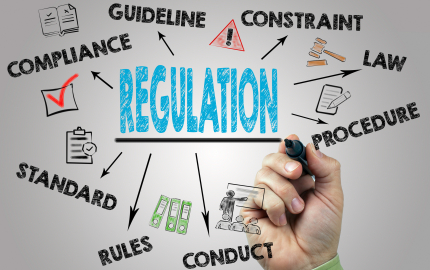
A brainstorm from the word regulation. A hand with a marker preparing to write ideas.
Companies regulated by the Environmental Protection Agency (EPA) have long complained that EPA too often uses guidance documents improperly, both to expand regulatory requirements beyond what the law permits and to avoid judicial review of such expansions. Moreover, regulated parties often argue that EPA rigidly enforces such guidance as binding federal rules, but ignores such guidance when it likes. Without expressly referencing EPA, the Department of Justice (DOJ) has now taken action that will make it harder for such alleged
Go
EPA Deletes Several Superfund Sites from the NPL and Targets More in 2018 and Beyond
by Russell V. Randle on January 10, 2018
U.S. Environmental Protection Agency (EPA) Administrator Scott Pruitt says that expediting cleanups at Superfund sites is one of his top priorities. Since 1980, EPA has had the authority to clean up contaminated sites and force parties responsible for the contamination to either perform cleanups or reimburse the government for EPA-led cleanup work through the Superfund program, also known as the Comprehensive Environmental Response, Compensation, and Liability Act (CERCLA).   According to EPA’s website, as of November 2017, 1,736 sites have been placed
Go
EPA Takes Initial Step to Replace Clean Power Plan
by Russell V. Randle on December 22, 2017
Uncertainty and speculation have swirled over the last few months regarding whether U.S. Environmental Protection Agency (EPA) Administrator Scott Pruitt would replace the Clean Power Plan (CPP) after proposing to repeal the plan in October. Or would the agency simply move forward with repeal without a replacement regulation? Administrator Pruitt has hinted at a replacement rule in interviews and in prepared remarks, but on Monday, the EPA provided the best evidence yet that the agency may be moving to replace
Go
Blessed (Financial) Assurance: EPA Changes Superfund Direction
On Friday, December 1, 2017, the U.S. Environmental Protection Agency (EPA) decided NOT to finalize rules to require hard rock mines and mineral processing operations to provide financial assurance to fund future cleanups of their properties under the federal Superfund law (Comprehensive Environmental Response, Compensation and Liability Act (CERCLA)). A link to EPA’s action can be found here. What a Difference a Year Can Make: Brief History of the Rule from Proposal to EPA’s Decision Not to Finalize Exactly a year before, EPA
Go
New Wave of Climate Change Related Litigation Focuses on Industry
September 19, 2017
Metal storm drain cover in concrete.
Climate change related cases are on the rise nationwide, just like sea water levels. In fact, according to a United Nations study released in May 2017, the U.S. has three times more climate change litigation cases than the rest of the world combined, and the number of countries with climate change cases has tripled since 2014. In conjunction with the increased number of cases, there has been an uptick in novel legal arguments lodged against governments, government officials, and industry to force
Go
Executive Order Set to Expedite Permitting and Authorization of Infrastructure Projects
August 28, 2017
Arial view of freeway interchange in a city.
During the campaign and thus far in the current administration, the President has prioritized the modernization of the Nation’s infrastructure and promised a $1 trillion investment plan to help fund that vision. There is rare bipartisan support in Congress for such a measure, as many agree that our roads, bridges, tunnels, railways, airports, energy, and water systems are in need of repair and replacement. Although no legislation has been proposed to fund such projects, last week the President signed an Executive Order that
Go
Federal Appeals Court Limits U.S. EPA’s General Waiver Authority under the Renewable Fuel Standards Program
August 25, 2017
Drawing of gas pump nozzle dripping gas.
In a recent decision, the U.S. Court of Appeals for the District of Columbia Circuit determined that the U.S. Environmental Protection Agency (U.S. EPA) wrongly invoked its general waiver authority and set the volumes for renewable fuel that must be blended into transportation fuel below the targets called for by Congress. The Renewable Fuel Standard Program The Renewable Fuel Standard (RFS), established by the Energy Policy Act of 2005, is a regulatory program that increases the amount of renewable fuels, such as
Go
EPA Given Additional Time to Ponder Next Steps on Clean Power Plan as Court Grants Another Stay
August 21, 2017
Person in a suit touching a sign that says Reduce CO2.
Over the last week, the U.S. Court of Appeals for the District of Columbia Circuit stayed two high-profile litigations concerning the regulation of carbon dioxide emissions from new and existing coal-fired power plants. By granting the U.S. Environmental Protection Agency’s requested stays, the Court provided the agency with additional time to weigh its options on whether to suspend, revise, or rescind the rules. Clean Power Plan Litigation Stayed Additional 60-Days On August 8, 2017, the Court extended the stay of the Clean
Go
EPA’s Task Force Recommendations to Revamp and Expedite Superfund Cleanups and Process – A Welcome Change
August 17, 2017
While the Environmental Protection Agency’s (“EPA”) Superfund program under the Comprehensive Environmental Response and Liability Act or “CERCLA” has often been dubbed the “Comprehensive Employment and Retirement Lawyers Act,” due to the arduous and time consuming process of remediating Superfund sites---EPA is seeking to expedite this process with sweeping changes (which could lead to an earlier retirement for environmental lawyers).   An EPA Superfund Task Force, specially convened on May 22, 2017 by EPA Administrator Scott Pruitt, completed its work in
Go
Understanding Mineral Rights and the Impact on the Value of Your Property
June 30, 2017
The United States is one of a handful of countries in which private real property owners can hold and own subsurface mineral rights. In a majority of countries, only the government can own and benefit from these rights. Therefore, if you own real property, you should be aware of the legal concept of mineral rights and how these rights can impact the value of your property. First, what are Mineral Rights? The term “mineral rights” generally refers to the right to explore,
Go
A New Budget, a New EPA Administrator, and New Uncertainty for Superfund Cleanups
June 01, 2017
When Scott Pruitt took over the post as Administrator of the United States Environmental Protection Agency (EPA), he made it clear that one of his top priorities was to expedite cleanups at contaminated sites across the country. Facing reductions in the agency’s FY2018 operating budget, including cuts to the Superfund program, it has become clear that in order to achieve this goal, Administrator Pruitt will not be able to simply increase spending, but instead must look to overhaul and restructure
Go
Update - Environmental and Energy Policy Round-Up: Status of Regulations and Key Decisions under the New Administration
May 23, 2017
As the environmental and energy regulatory landscape under the new Administration continues to shift, we want to keep our clients up to speed, as many of these policy changes may directly or indirectly impact your businesses. The following updates our earlier April 6, 2017 post, entitled “Environmental and Energy Policy Round-Up: Status of Regulations and Key Decisions under the New Administration,” where we discussed how the new Administration’s policy objectives include reducing regulatory burdens, encouraging domestic energy production, and rolling
Go