

Publications
Force Majeure Clauses and Construction Contract Issues Related to COVID-19
A key tool in mitigating the risks due to unforeseen events is the force majeure clause contained in many commercial and other types of contracts. In various states, including Maryland, residential and commercial construction companies have been deemed “essential” and may remain open even when a shelter-in-place order has been executed by a state’s Governor. So how will COVID-19 affect construction contracts and, in particular, will a force majeure clause contained in a construction clause provide any relief should delays or other issues arise due to COVID-19?
Force Majeure Clause: A Primer
A force majeure clause typically relieves the parties from completing certain obligations under a contract when extraordinary events arise that are unavoidable and beyond the realistic control of the parties to the contract. Most common examples include flood, fire, earthquake, or other “acts of God.”
Before the outbreak of COVID-19, force majeure clauses have not typically included express language related to epidemics, pandemics, and other health crises. Much like after September 11, 2001, when there was an increase in the usage of “acts of war or terrorism” in force majeure clauses, most contracts drafted in the post-COVID-19 era likely will include epidemics and pandemics as part of force majeure clauses. But what about those contracts that do not contain this express language?
Will My Force Majeure Clause Cover COVID-19?
It is important to review the exact terms of the contract to know whether the effects of COVID-19 are covered under the construction contract. Even without expressly mentioning epidemics and pandemics, the force majeure clause may contain language that could provide relief. For example, due to numerous states’ governors declaring a state of emergency, a force majeure provision that includes governmental actions, decrees, or orders may cover the COVID-19 emergency. Also, due to proclamations signed by President Trump, parties affected by travel restrictions may be able to use the protections of a force majeure clause. There is also the issue of labor shortages, stop work orders, and delays caused by these travel restrictions, which have severely impacted the ability to engage in commerce.
Protecting Your Rights under the Construction Contract – What You Need to do Right Now
Be sure to document any and all delays, as well as increased costs to the construction work being performed, noting how it was caused. These records will allow you to demonstrate the impact COVID-19 is having on your ability to perform under the construction contract. If you believe there may be delays or impacts to construction projects, be sure to get in touch with any partners, investors, or other key individuals/entities to discuss ways to address these ongoing or continuing delays or impacts.
Many force majeure clauses provide rights to parties as a result of certain events. However, most clauses require a party to send formal, written notice to the other party within a certain number of days following a force majeure event. The failure to notify the other party could severely impact your rights and abilities under the contract as a result of COVID-19. Reviewing your contract’s force majeure provision is critical to ensure you do what is necessary now in order to protect yourself from liability later.
Different Construction Contracts Provide Different Rights
It is also critical to know what type of contract (or subcontract) you have because every situation, just like every contract, will be different. For example, an AIA contract does not address epidemics or pandemics specifically. However, under the standard AIA contract, it is possible that delays or substantial issues caused by COVID-19 may fall within the categories of “unusual delay in deliveries,” or “other causes beyond the Contractor’s control.”
However, the EJCDC Standard General Conditions (Art. 4 of C-700 Rev 1, 2013) and ConsensusDocs (Art. 6 of Document 200 – 2017) specifically address “epidemics” as examples of delay beyond the contractor’s control, and ConsensusDocs goes as far to protect disruptions from “unavoidable . . . circumstances” and “adverse governmental actions.”
The difference between boilerplate contracts in the construction industry can be significant when it comes to the scope of force majeure provisions because there could be full relief, an extension in time, increase in price, or possibly even termination of the contract. This is where getting in touch with your attorney at Miles & Stockbridge can be critical to ensure compliance under the terms of the construction contract.
Supply Chain Issues Due to “Social Distancing” and Quarantines
Businesses that are dealing with supply chain issues as a result of the global COVID-19 outbreak need to read through force majeure provisions as well to see what protections they are afforded. Some contracts allow for parties to terminate the contract due to force majeure, while others merely postpone the completion of the contract. Many contracts require the contractor to mitigate damages and provide notice, in the manner provided for under the contract. But certainly shutdowns of entire regional and national business structures – such as the restaurant/hospitality industry in the Washington, DC metropolitan area, businesses in France, and factories in China – could be considered unforeseeable emergencies. It is also important to check any insurance contracts to see what relief may be available to you through your insurance carrier, such as business interruption insurance.
Negotiating Contracts Today, Tomorrow, and Beyond
For those in the process of negotiating contracts, it is critical to revisit the force majeure provisions within those agreements to see if they need to be reworded. For those who use form contracts with high frequency, it is also important to see whether any revisions need to be made to ensure adequate protection from COVID-19 and any other future epidemics and pandemics. Finally, for those under contract with existing force majeure clauses, it is important to review those clauses to confirm your rights and obligations, including what steps are necessary to preserve and enforce your rights.
What If I Have More Questions?
The attorneys at Miles & Stockbridge have decades of experience assisting clients with the drafting, interpreting, enforcing, and disputing the language contained in force majeure clauses within construction contracts. We have established a team to assist you with any questions you may have regarding construction contracts and the impacts of COVID-19.
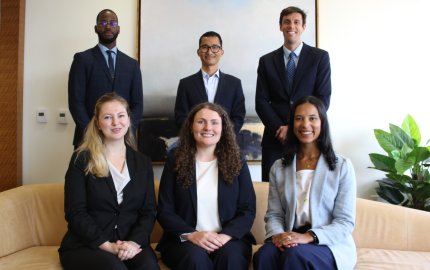
This alert was written by Anthony Cavanaugh, Jessica duHoffmann, Jeremy Scholtes, Jack Robb, Thomas Wolf, Raymond Monroe, and Joshua Chazen, lawyers in the Construction practice group at Miles & Stockbridge.
Any opinions expressed and any legal positions asserted in the article are those of the author(s) and do not necessarily reflect the opinions or positions of Miles & Stockbridge P.C. or its other lawyers. This article is for general information purposes and is not intended to be and should not be taken as legal advice on any particular matter. It is not intended to and does not create any attorney-client relationship. Because legal advice must vary with individual circumstances, do not act or refrain from acting on the basis of this article without consulting professional legal counsel. If you would like additional information on the subject matter of this article, please feel free to contact any of the lawyers listed above. If you communicate with us, whether through email or other means, your communication does not establish an attorney-client relationship with either Miles & Stockbridge P.C. or any of the firm's lawyers. At Miles & Stockbridge P.C., an attorney-client relationship can be formed only by personal contact with an individual lawyer, not by email, and requires our agreement to act as your legal counsel together with your execution of a written engagement agreement with Miles & Stockbridge P.C.