

Client Alerts 

What’s Different in the Proposed Joint Employer Rule
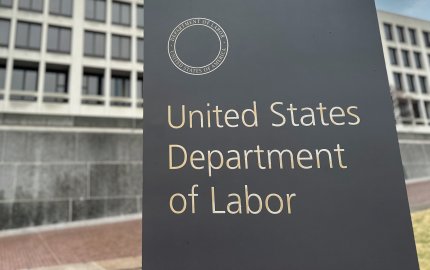
The U.S. Department of Labor (DOL) published a Notice of Proposed Rulemaking (NPRM) last month for its proposed rule on joint employment, where multiple employers simultaneously employ the same employee. The proposed rule aims to clarify joint-employer status under the Fair Labor Standards Act (FLSA) and would align DOL’s Family and Medical Leave Act (FMLA) and Migrant and Seasonal Agricultural Worker Protection Act (MSPA) joint-employer analysis with DOL’s FLSA analysis. Joint employment has been recognized by DOL since the FLSA was enacted
Go
Virginia and Washington State Enact Sweeping Noncompete Restrictions: What Employers Need to Know
Two states on opposite coasts are reshaping the rules governing noncompete agreements in their jurisdictions. Virginia has amended its law to prohibit enforcement of noncompetes against employees who are terminated without cause in the absence of certain severance benefits, while Washington has gone further by enacting a near-total ban on noncompete agreements for all workers. Together, these laws reflect a broader national trend of restricting noncompetes and may call for businesses with employees in either state to review their current agreements
Go
Executive Order Targets DEI Practices by Federal Contractors: What You Need to Know
President Donald Trump signed an Executive Order (EO) on March 26, “Addressing DEI Discrimination by Federal Contractors,” reinforcing the Trump Administration’s stance on DEI programs and escalating the related restrictions on what the Administration considers “racially discriminatory DEI activities.” The Executive Order, which took effect immediately, mandates that all federal government prime contracts, “contract-like” instruments and subcontracts, including lower-tier subcontracts, include a specific contract clause, requiring contractors to comply with the clause or risk potential False Claims Act (FCA) liability. Contractors
Go
Highlights from the 2026 Hot Topics in Employment Law Seminar
by Grace Clarke, Elisabeth K. Hall on February 26, 2026
Miles and Stockbridge’s Labor, Employment, Benefits & Immigration Practice Group presented its 24th annual Hot Topics in Employment Law Seminar last week to business executives, human resources professionals and in-house counsel. Topics included navigating the use of AI in the workplace, updates from the National Labor Relations Board, immigration policy shifts, DEI policy enforcement and the importance of properly drafted employment documents. Here are highlights from the three interactive sessions. Adjusting to an AI-influenced Workplace AI continues to be a driving issue in
Go
Ensuring Digital Accessibility: DOJ’s Updated ADA Regulations for Government Websites and Apps
by Elisabeth K. Hall, Grace Clarke on November 20, 2025
Beginning in April, state and local governments will be required to comply with a new final rule published by the U.S. Department of Justice updating regulations for Title II of the Americans with Disabilities Act. The Rule establishes specific requirements, including technical standards, for all digital services provided by public entities, such as websites, mobile applications, online learning platforms, registration systems and financial aid information to ensure that such services are accessible to people with disabilities. Title II of the ADA
Go
Fourth Circuit Holds ‘Series of Hateful Workplace Encounters’ Based on Race Can Create Hostile Working Environment Under Title VII
by Elisabeth K. Hall on January 09, 2023
Blue hands pointing to a small red person sitting on a blue square.
The U.S. Court of Appeals for the Fourth Circuit has expanded its view of what a hostile work environment looks like and lowered the bar in terms of what a plaintiff must show to sufficiently allege a race-based hostile work environment claim under Title VII. Marie Laurent-Workman, an African American and former career civilian employee of the United States Army initially filed suit in U.S. District Court for the Eastern District of Virginia alleging multiple counts of discrimination, including on the
Go
ICYMI: Employee Non-Compete Agreements No Longer Allowed in D.C.
by Elisabeth K. Hall on October 21, 2022
An uncapped pen laying onto of a blank non-compete agreement.
The Council of the District of Columbia passed the Ban on Non-Compete Agreements Amendment Act of 2020 (the “Act”), one of the strictest bans on employee non-compete agreements in the country, approximately two years ago. After several delays and modifications, the amended Act – aptly named the Non-Compete Clarification Amendment Act of 2022 (D.C. Act 24-526) – was signed into law July 27, 2022 and finally took effect Oct. 1, 2022. Unlike the original 2020 Act, which sought to impose
Go
According to Maryland Court of Appeals Decision, Pre- and Post-Shift Travel Time May Be Compensable
by Elisabeth K. Hall on August 25, 2022
Elisabeth Koloup Hall is smiling, wearing a black jacket, and black shirt.
In a decision on July 13, 2022, Maryland’s highest court held that the federal Portal-to-Portal Act has not been adopted or incorporated into Maryland wage laws or regulations. As a result, “what constitutes ‘work’ under Maryland law is not limited to what is compensable work under the [federal] PPA and FLSA” and Maryland employers may be required to pay their employees additional wages for time spent under a broader state definition of work that is not otherwise compensable at the
Go
ICYMI – Maryland’s Flexible Leave Act Includes Paid Bereavement Leave
by Elisabeth K. Hall on July 29, 2022
Person in a black pea coat holding a bouquet of white roses.
For those of you who may have missed this important update, Maryland law now requires employers with 15 or more employees to permit the use of existing accrued paid leave for bereavement purposes. Effective October 1, 2021, Maryland’s Flexible Leave Act (“MFLA”) was amended to allow employees to use paid leave for bereavement purposes related to the death of an immediate family member. For purposes of bereavement leave, “immediate family member” is broadly defined as the employee’s spouse, parent, or
Go
Washington Becomes Second State to Declare Nondisclosure and Nondisparagement Provisions Unlawful in Employment and Independent Contractor Agreements
by Elisabeth K. Hall on April 12, 2022
Elisabeth Koloup Hall is smiling, wearing a black jacket, and black shirt.
On March 24, 2022, Washington’s Silenced No More Act (formally known as Engrossed Substitute House Bill 1795) was signed into law by Governor Jay Inslee. As a result, Washington has become the second state to declare certain nondisclosure and nondisparagement provisions in employment and independent contractor agreements illegal. California passed its own version of the Silenced No More Act last year. The Washington Silenced No More Act is scheduled to take effect on June 9, 2022. Once enacted, the law will
Go
OSHA Issues Proposed COVID-19 Vaccine Mandate ETS for Private 100+ Employers
by Elisabeth K. Hall on October 25, 2021
Worker wearing a hard hat and surgical mask holding a tablet in a warehouse.
On October 12, 2021, the Occupational Safety and Health Administration (OSHA) delivered a draft of the emergency temporary standard (ETS) requiring COVID-19 vaccination or weekly testing of workers for private employers with 100 or more employees to the White House for final review and approval. The ETS is being issued in response to President Biden’s six-pronged Action Plan, announced on September 9, 2021, aimed at addressing the nation’s most recent surge of coronavirus cases. As part of his Action Plan, Biden specifically
Go
Employers Take Heed: The 2021 EEO-1 Component 1 Reporting Deadline Is Fast Approaching
by Elisabeth K. Hall on July 22, 2021
Five people sitting in chairs with there backs against the wall.
The deadline for employers to submit and certify 2019 and 2020 EEO-1 Component 1 Data to the Equal Employment Opportunity Commission (EEOC) is Monday, August 23, 2021. Covered employers therefore have a little over one month to complete and submit an EEO-1 Report containing their respective workforce data in accordance with the reporting requirement. The original deadline of July 19, 2021 was extended to August 23 by the EEOC in late June 2021. What is required? Pursuant to Title VII of the
Go
Part III: DOL Releases Model Notices for Mandatory COBRA Premium Subsidy
Medical professional talking to a person at a desk. A stethoscope sitting on top of paperwork in the fore ground.
Under the American Rescue Plan Act of 2021 (ARPA), which was passed by Congress on March 11, 2021, the cost of health insurance coverage pursuant to the Consolidated Omnibus Budget Reconciliation Act of 1985 (“COBRA”) is fully subsidized from April 1, 2021 until September 30, 2021 for individuals who lost their health coverage due to an involuntarily termination or a reduction in hours. The ARPA requires employers to notify eligible individuals about the new COBRA subsidy by May 31, 2021.
Go
Fourth Circuit Ruling Favors Employers in High Profile ADA Case
by Elisabeth K. Hall on December 04, 2020
On November 18, 2020, the United States Court of Appeals for the Fourth Circuit upheld a decision that retailer Lowe’s Home Centers LLC (“Lowe’s”) did not violate the Americans with Disabilities Act (ADA) when it removed a disabled store manager from his position and declined to reassign him to a similarly situated vacant managerial position.   The Plaintiff, Charles Elledge, was a long time employee of Lowe’s and had worked in a demanding position managing multiple store locations and working long
Go
Federal Court Vacates Key FFCRA Regulations
by Elisabeth K. Hall on August 10, 2020
On August 3, 2020, a federal court in the Southern District of New York overturned key provisions of the Families First Coronavirus Response Act (FFCRA)—the federal law requiring certain employers to provide eligible employees with emergency paid sick leave (EPSL) and expanded family and medical leave (EFML) for specified reasons related to COVID-19—significantly broadening employee eligibility to receive emergency leave under the Act. The unexpected decision came in response to a challenge by the state of New York, which sought
Go
SCOTUS Votes 6–3 to Extend LGBTQ Protections Under Title VII
by Elisabeth K. Hall on June 16, 2020
In a seminal 6–3 decision for LGBTQ rights on Monday, June 15, 2020, the Supreme Court of the United States held plainly: An employer who fires an individual merely for being gay or transgender defies the law. The Opinion by Justice Gorsuch, issued more than eight months after the Supreme Court heard oral arguments in the three consolidated cases at the center of this action, provides that an employer who intentionally treats a person worse because of sex—such as by
Go
EEOC Issues Additional Guidance for Employers on COVID-19 and the ADA, the Rehabilitation Act, and Other EEO Laws
by Elisabeth K. Hall on April 28, 2020
On April 17, 2020, the EEOC updated its guidance initially published on March 17, 2020, entitled “What You Should Know About COVID-19 and the ADA, the Rehabilitation Act, and Other EEO Laws” to address additional employment concerns in the wake of the COVID-19 pandemic. Notable new topics addressed by the guidance, including issues related to temporary accommodations, undue hardship and returning to work, are discussed below. For a summary of the topics previously addressed by the EEOC in this guidance,
Go
Will SCOTUS Extend LGBTQ Protections Under Title VII?
by Elisabeth K. Hall on October 24, 2019
On October 8, 2019, the United States Supreme Court heard two oral arguments in three highly anticipated cases centered on the controversial issue of whether sexual orientation and transgender status fall within the protected class of “sex” under Title VII, a 1964 civil rights law protecting employees against discrimination. The first argument consolidated two cases with gay male plaintiffs who alleged they were fired because of their sexual orientation, Altitude Express, Inc. v. Zarda and Bostock v. Clayton County. The second argument was
Go
Take It or Leave It: The Rise of Outsourcing Leave Administration and What Employers Should Know About It
by Elisabeth K. Hall on November 27, 2018
As attracting and retaining employees grows increasingly critical to a business’s success, the pressure is mounting for employers to ensure accurate and consistent execution of leave policies, sometimes across multiple corporate locations nationwide. However, it is becoming more and more difficult for employers to keep up and comply with the changing regulations regarding employee leaves of absence. With additional state and local leave and paid leave laws coming into effect and with the trend of more jurisdictions considering adopting such
Go
Masterpiece Cakeshop: Considerations for Employers
by Elisabeth K. Hall on June 29, 2018
On June 4, 2018, the United States Supreme Court issued its long-awaited opinion in Masterpiece Cakeshop, Ltd. v. Colorado Civil Rights Commission, ultimately siding with the baker who refused to make a wedding cake for a gay couple. Voting 7-2, the majority found that the lower court had inappropriately dismissed the baker’s religious beliefs and in doing so violated his First Amendment right to the free exercise of religion.  However, the majority opinion was narrow and focused largely on the Commission’s
Go
Second Circuit Joins Seventh Circuit, EEOC in Holding that Anti-Gay Discrimination is Sex Discrimination
by Elisabeth K. Hall on March 05, 2018
With its en banc decision on February 26, 2018 in Melissa Zarda v. Altitude Express, Inc., No. 15‐3775 (2d Cir. Feb. 26, 2018), the Second Circuit Court of Appeals became the second federal appeals court to hold that sexual orientation discrimination is prohibited sex discrimination under Title VII of the federal Civil Rights Act of 1964, which expressly prohibits discrimination based on sex, but not sexual orientation. Last year in Hively v. Ivy Tech Community College, No. 15-1720 (7th Cir. Apr. 4, 2017), the
Go
Don’t Like that NLRB Ruling? Just Wait, it May Change!
by Marc K. Sloane, Elisabeth K. Hall on December 26, 2017
As 2017 and Chairman Phillip Miscimarra’s term drew to an end, the National Labor Relations Board (“NLRB” or “Board”) issued a flurry of decisions overturning several Obama-era NLRB decisions. Because Board members are appointed by the President, the political make-up of the Board (5 members), and its overall view of employer-employee-union behavior, changes on a fairly regular basis. However, the scope of the recent decisions is unusually broad and has resulted in many labor practitioners telling their clients, “Remember when
Go
The Bill That Could End Mandatory Arbitration of Sexual Harassment Claims
by Elisabeth K. Hall on December 20, 2017
Given the flood of public sexual harassment accusations in recent months, a bipartisan coalition of lawmakers and celebrities have come together to introduce legislation that would eliminate forced arbitration clauses in employment agreements, which advocates say reduce negative exposure for businesses and discourage women from speaking out about sexual harassment and gender discrimination claims. If enacted, the “Ending Forced Arbitration of Sexual Harassment Act” would prevent businesses from enforcing mandatory arbitration agreements with regard to complaints of sexual harassment and gender discrimination
Go
An Inside Job: Highlights From November’s ACC Presentation
by Elisabeth K. Hall on November 22, 2017
On November 8, 2017, Suzzanne W. Decker, a Principal in the Miles & Stockbridge Labor, Employment, Benefits & Immigration practice group, and Sandra McLelland, Managing Counsel at Under Armour, presented a webinar to members of the Association of Corporate Counsel (“ACC”) on preserving the attorney-client privilege in corporate investigations and the extent to which internal communications may be protected by the attorney-client privilege or the attorney work-product doctrine.   Companies routinely perform internal investigations in response to employee grievances, whistleblower complaints
Go
Hope For the Best, Prepare For the Worst: How to Effectively Manage the Perpetual Risk of Employee Loss
by Elisabeth K. Hall on June 07, 2017
Inevitably, all businesses must deal with employee turnover and the departure of key employees. Such departures have become more frequent of late, as the economy is again on the rise, more jobs are available, the unemployment rate is at an almost decade low 4.4% and wages have increased. Indeed, the average wage growth for full-time workers aged 25-34 who changed jobs in the first quarter of this year was 10.2%, versus a 6.8% increase for job holders. As a result,
Go