

MSLaw Blog
New State Department Policy Expands Visa Restrictions Under Catch-All ‘Foreign Policy’ Ground
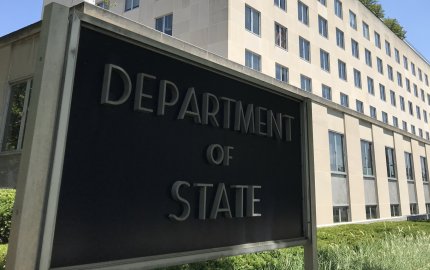
The U.S. Department of State announced last month a new visa restriction policy targeting foreign individuals who obstruct or interfere with the resolution of international parental child abduction cases brought under the 1980 Hague Convention on the Civil Aspects of International Child Abduction.
On Sept. 28, 2026, the Trump administration, pursuant to the Immigration and Nationality Act (INA), issued the new policy implementing targeted visa restrictions, specifically allowing the State Department to deny visas to foreign individuals who are “responsible for, [or who are] complicit in, impeding the prompt resolution of international parental abduction cases, as well as their immediate family members.” The policy includes “individuals who intentionally fail to implement or comply with laws, policies, or court orders to resolve these cases and return children to their country of habitual residence” and specifically names “foreign government officials, judges, judicial administrators, [and] law enforcement officials” as those who “prolong family separations and block the return of children to the United States” and who may therefore be subject to visa restrictions.
The announcement comes on the heels of the 2026 Annual Report to Congress on International Child Abduction, which cites 14 countries or areas demonstrating a pattern of noncompliance with the return of abducted children.
The Intersection of the INA and the Hague Abduction Convention
The State Department issued the policy under Section 212 of the INA, 8 U.S.C. § 1182, which enumerates certain grounds for inadmissibility and/or ineligibility for entry and visas including but not limited to public health concerns, criminal background and convictions, terrorist activities and foreign policy.
The foreign policy ground bars foreign nationals from entry where their “entry or proposed activities in the United States the Secretary of State has reasonable ground to believe would have potentially serious adverse foreign policy consequence for the United States.” 8 U.S.C. § 1182(a)(3)(C)(i). It is under this provision that the Trump administration promulgated the new visa restriction relating to international parental child abduction.
This new policy restriction is not the first nor the only intersection between the INA and the Hague Abduction Convention. Following the passage in 1988 of the International Child Abduction Remedies Act (ICARA), the implementing legislation of the Hague Abduction Convention, Congress passed the Immigration Act of 1990, overhauling the INA to include the foreign policy ground and an international child abduction ground for inadmissibility to the United States, among others.
The INA currently contains a separate, miscellaneous ground for inadmissibility to the United States for foreign nationals who wrongfully retain an American child outside the U.S. (in a jurisdiction not party to the Hague Abduction Convention) following a U.S. custody order granting custody to another person until the child is returned to his or her habitual residence. See 8 U.S.C. § 1182(a)(10)(C).
Inadmissibility is not limited to just the foreign national who wrongfully retains a child in violation of a U.S. custody order but extends to foreign nationals who intentionally assist in the wrongful retention of an American child and who are “known by the Secretary of State to be intentionally providing material support or safe haven to” a foreign national wrongfully retaining a child. 8 U.S.C. § 1182(a)(10)(C)(ii). Similarly, the new visa policy restriction extends to family members of those found to have intentionally obstructed or interfered with international parental child abduction cases.
Implications of the New Visa Restriction Policy
The existing language of the INA restricts the admissibility of certain foreign nationals to the U.S. if the foreign national withholds or retains an American child in a state not a member of the Hague Abduction Convention.
The new policy restriction explicitly broadens the scope of denial of visas to foreign nationals, including foreign government officials, judges and law enforcement officers, who have intentionally obstructed the prompt resolution of an international parental child abduction case. The press statement does not elaborate on whether the foreign national must be found by a court or otherwise adjudicated to have intentionally obstructed an international parental child abduction case or whether it is based on the secretary of state’s “reasonable ground to believe” that such obstruction of complicity occurred. See 8 U.S.C. § 1182(a)(3)(C).
Neither the new visa restriction policy nor the INA provisions relating to international parental abduction address circumstances in which one of the Hague Abduction Convention’s discretionary exceptions to return is asserted or established. For example, the policy does not provide guidance on how it will apply to cases involving a taking parent who fled domestic violence in the United States with American children to either a country that is a member of the Hague Abduction Convention, has ratified the treaty with the U.S. or is a non-contracting state.
While the significance of this new visa policy restriction is yet unknown, it does not appear to implement a blanket restriction on visas against any specific country, officials or citizens. Moreover, the State Department has not issued further guidance on whether visas have already been denied under the new policy.
Miles & Stockbridge’s Family Law & Private Clients team will continue to monitor developments related to the new visa policy and how it may affect child abduction, immigration and other private client matters.
Opinions and conclusions in this post are solely those of the author unless otherwise indicated. The information contained in this blog is general in nature and is not offered and cannot be considered as legal advice for any particular situation. The author has provided the links referenced above for information purposes only and by doing so, does not adopt or incorporate the contents. Any federal tax advice provided in this communication is not intended or written by the author to be used, and cannot be used by the recipient, for the purpose of avoiding penalties which may be imposed on the recipient by the IRS. Please contact the author if you would like to receive written advice in a format which complies with IRS rules and may be relied upon to avoid penalties.