On November 17, 2021, DoD published a notice of proposed rulemaking in the Federal Register, which formally announced the launching of the Cybersecurity Maturity Model Certification (CMMC) 2.0 framework. Among other things, version 2.0 streamlines the framework from 5 levels to 3 levels, scales back the requirement that all 300,000 contractors within the defense industrial base (DIB) obtain third party certification, and provides DoD additional flexibility by allowing for the limited use of Plans of Action & Milestones (POA&Ms) and
The federal False Claims Act results in a host of interesting relator claims. This one caught my eye. In United States of America v. Intermountain Healthcare, Inc., Case No. 2:20-cv-00372-TC-CMR (U.S. Dist. Ct. D. Utah 1/28/2022), the relator alleged that anesthesiologists participating in his medical group often spent time during surgeries playing on their phones or other personal electronic devices. Some allegedly watched football, others paid bills. Naturally, the relator alleged that the anesthesiologists were not paying attention to their
Medical providers often are left confused by the incredibly complex statutory and regulatory body of law implemented by the Centers for Medicare and Medicaid Services (CMS). Without further administrative guidance, providers are left to their own conclusions with regard to what CMS intended. Unfortunately, sometimes these decisions lead to expensive and time-consuming False Claims Act litigation brought by relators, who disagree with the provider’s interpretation. In a recent decision, the Fourth Circuit offers some well-deserved protection from False Claims Act actions
Federal Corporate and Individual Income Tax Deadlines
The federal filing deadline for 2021 for calendar year end corporate income tax returns (IRS Form 1120) and individual income tax returns (IRS Form 1040) is Monday, April 18, 2022 for most taxpayers. This is a result of Washington D.C.’s Emancipation Day holiday on April 15th. By law, for tax deadline purposes, the IRS recognizes the District of Columbia’s legal observation of holidays in the same manner as federal holidays. For those taxpayers who
In late 2020, the IRS issued a notice confirming imminent proposed regulations that would allow certain tax strategies to avoid the individual $10,000 state and local tax (“SALT”) deduction limitation of the Tax Cuts and Jobs Act (“TCJA”, P.L. 115-97 (Dec. 22, 2017)). (Notice 2020-75). This notice cited a 1958 revenue ruling that allowed a partnership to subtract a local tax in calculating its net income to its partners, thereby holding that partners who use the standard deduction without itemizing
We reported last year on New York’s newly enacted commercial finance disclosure law and the legislature’s quick pivot thereafter, expanding the law’s reach to all loans up to $2,500,000 - a change from the previous limitation of $500,000. As we discussed in our prior post, the commercial finance disclosure law (CFDL) requires certain providers of commercial financings to disclose consumer-like loan information, similar to certain federal Truth-in–Lending Act disclosures that are made to consumers in consumer loans.
Since our last report,
Why Maryland Collectors of Consumer Debts Need to Be Concerned About Convenience Fees
A recent Fourth Circuit Court of Appeals decision may have sweeping implications across the consumer debt collection industry in Maryland. In Alexander v. Carrington Mortgage Services, LLC, the Fourth Circuit held that a mortgage loan servicing company violated the Maryland Consumer Debt Collection Act and the Maryland Consumer Protection Act by charging debtors a convenience fee for making a one-time payment online or by phone, when the agreement
When can a data breach can get worse? When the process of notifying victims creates a second breach. Take the example of a cancer treatment center that recently paid $425,000 to settle allegations that included a faulty notification process following a breach. The story provides an important lesson.
One Breach Leads to Another
It began with a spear phishing attack. Employees at the facility fell victim to the attack and their email accounts were compromised. The result: protected health information and other
As we reported last year, the Dodd-Frank Wall Street Reform and Consumer Protection Act (Dodd-Frank Act), among other things, required the Consumer Financial Protection Bureau (CFPB) to adopt regulations governing the collection of certain small business lending data. Section 1071 of the Dodd-Frank Act amended the Equal Credit Opportunity Act (ECOA), as follows: “in the case of any application to a financial institution for credit for [a] women-owned, minority-owned, or small business, the financial institution shall – (1) inquire whether
On January 19, 2022, Maryland Comptroller Peter Franchot announced an extension for the State’s individual income tax filing and payment deadline for tax year ending 2021. The announcement was made via a virtual news conference with a news release following shortly thereafter. Instead of tax filings and payments being due on April 18, 2022, the new automatic deadline is July 15, 2022. Taxpayers will not need to request an extension; instead both resident and nonresident taxpayers shall receive the automatic
After hearing oral argument on January 7, 2022, on January 14, 2022, the Supreme Court issued a ruling staying the Biden administration’s vaccine or testing mandate for large employers.
As many doubtless know, on September 9, 2021, the Biden administration announced a sweeping six-pronged plan aimed at addressing the pandemic, which included a requirement that all employers with 100 or more employees have their employees vaccinated or tested weekly for COVID-19. In setting forth his plan, the president charged the Occupational Safety and Health
It happens so often. An individual voluntarily talks with law enforcement agents in an effort to appear cooperative, but the prosecutor later labels the statements as incriminating “admissions.” Whether made before or after arrest, such statements prove compelling evidence. For example, during a recent trial, the prosecutor successfully argued to the jury that a Harvard professor unquestionably made false statements to government agencies because “the defendant himself has said that he did” during an interview.
Example of the Harvard Professor
Federal agents
What You Need to Know
The injunction on the ETS has been lifted and the rules are currently in effect
OSHA has offered a brief non-enforcement holiday for violations
OSHA will not enforce regulations until January 10
OSHA will not issue citations for employers taking good faith steps to get into compliance prior to February 9
Petition for a further stay has been filed with the SCOTUS
Friday evening, the 6th U.S. Circuit Court of Appeals delivered a welcome decision to the Biden Administration and dissolved
With the new collection agency rule of the Consumer Financial Protection Bureau (“CFPB”) having taken effect on November 30, 2021,1 we thought we could help round out your understanding of the collection agency laws by providing an overview of the licensing of collection agencies by the states.
Every state does not license, register, issue permits, or require some kind of “approval-related filing” (herein, a “license”) for collection agencies. Thirty-four states now license collection agencies, with California being the newest state to license
On November 15, 2021 (the “Effective Date”), President Biden signed into law the Infrastructure Investment and Jobs Act (the “Act”) to invest in our nation’s infrastructure and competitiveness. The federal government regularly passes transportation bills to fund traditional road, bridge, and mass transit projects. However, the Act dwarfs those efforts in size, at over one trillion dollars, and redefines infrastructure for the modern era.
Climate change heavily influences the spending guidelines of the Act due to its undeniably large impact on
Updates and negotiations for President Biden’s tax plan continue to filter through Congress. The House Ways and Means Committee recently passed the Build Back Better Act (the “Act”), and it is now on its way for the Senate’s consideration.
This is an update to our prior blog post about the tax plan released by House Democrats in September. We have noted the differences between the two proposals accordingly.
Corporate Tax Provisions
Corporate AMT. The Act imposes a 15% alternative minimum tax on the
On November 12, 2021, Stephanie Baron, Kirsten Eriksson, Suzzanne Decker, Veronica Jackson, and Paolo Pasicolan of Miles & Stockbridge’s Labor, Employment, Benefits, & Immigration Practice presented a webinar about the OSHA’s recent Emergency Temporary Standard (“ETS”).
Here’s what you missed if you were unable to attend:
Challenges to OSHA’s ETS
As you may have heard in the news, there have already been several challenges to the legality of the ETS. The 5th Circuit issued a temporary injunction against enforcement of the ETS,
On October 25, 2021, the Equal Employment Opportunity Commission (EEOC) issued guidance for employers and employees regarding religious objections to COVID-19 Vaccine Mandates. With many employers implementing COVID-19 vaccine requirements, (discussed in our October 8, 2021 blog post), employees may be requesting religious accommodations. As such, this updated guidance is helpful for employers seeking to ensure compliance with Title VII.
Title VII, in part, prohibits employment discrimination based on religion. This includes a right for job applicants and employees to request
On November 4, 2021, the U.S. Department of Defense (DoD) Office of the Under Secretary of Defense for Acquisition and Sustainment (OUSD(A&S)) announced Version 2.0 of the highly publicized Cybersecurity Maturity Model Certification (CMMC). This updated version seeks to simplify the model and reduce compliance costs by streamlining the program and scaling back the requirement that all defense contractors obtain third-party certification of their cybersecurity capabilities. Under CMMC 2.0, contractors at the lower CMMC levels will be allowed to self-certify.
After much anticipation, on November 4, 2021, the Occupational Safety and Health Administration (OSHA), issued its long-awaited Emergency Temporary Standard (ETS), requiring mandatory COVID-19 vaccination or weekly testing for private employers with 100 or more employees. Shortly after the ETS was issued, a lawsuit was filed to enjoin the enactment and enforcement of the ETS. The Fifth Circuit Court of Appeals ruled to temporarily enjoin the ETS. As the case proceeds employers should keep watch for updates. In the interim, we
On October 12, 2021, the Occupational Safety and Health Administration (OSHA) delivered a draft of the emergency temporary standard (ETS) requiring COVID-19 vaccination or weekly testing of workers for private employers with 100 or more employees to the White House for final review and approval. The ETS is being issued in response to President Biden’s six-pronged Action Plan, announced on September 9, 2021, aimed at addressing the nation’s most recent surge of coronavirus cases. As part of his Action Plan, Biden specifically
The Department of Justice (DOJ) recently overturned the prior administration’s limitations on the use of regulatory guidance in False Claims Act (FCA) litigation. Now, DOJ attorneys may rely on guidance documents “in any appropriate and lawful circumstances.” How should compliance programs respond to the resurgence of the regulators in the ongoing FCA wars?
Background
Former Attorney General Jeff Sessions initiated the limitation on the use of regulatory guidance in the prior administration with his Memo dated November 16, 2017. His mandate prohibited “Improper Guidance
In the absence of a federal law requiring disclosures be provided to small businesses, regulators in California in 2018, and now New York, have jumped into the void. With the Enactment of the New York Commercial Finance Disclosure Law (“CFDL”) on December 24, 2020, New York regulators have moved forward to propose certain disclosure regulations for those providing commercial financing to small businesses. In one of her first actions upon assuming her position, the Acting Superintendent of the New York
As an employer, you might be thinking about implementing a mandatory vaccine policy for your workforce. There are many issues to consider when developing a mandatory vaccine policy, and it is hard to keep up with fast-developing federal, state, and local requirements. Before putting a policy into place, what are some of most pressing issues that you should be thinking about?
State Law Considerations
It is important to consider the state(s) where you have employees. Several states, including Florida and Texas, passed
On September 24, 2021, the Safer Federal Workforce Task Force issued COVID-19 Workplace Safety: Guidance for Federal Contractors and Subcontractors (the “Guidance”). This highly anticipated Guidance outlines the Covid-19 protocols for government contractors that were announced on September 9 in Executive Order 14042 (Executive Order on Ensuring Adequate COVID Safety Protocols for Federal Contractors) (“Order”), which was covered in a recent M&S Industry Alert. These new protocols will be enforced through a contract clause that must be included in all
The Maryland Court of Special Appeals held on September 7, 2021 that Maryland public school teachers cannot be held liable in negligence for the injuries of students under their supervision at the hands of other misbehaving students. Gambrill v. Board of Dorchester County, et al., No. 0886, September Term 2019 (September 7, 2021). The Court upheld the trial court’s summary judgment decision in favor of the Board of Education of Dorcester County related to the treatment of a sixth grade
Update (October 26, 2021): The Biden Administration has announced that the vaccination requirement for international travelers to the United States described in this post will go into effect on November 8, 2021. The vaccination requirement will apply to travelers arriving both at airports and land border crossings. Limited exceptions will apply, most notably for children under 18 years of age.
The Biden administration has announced that it will lift current regional pandemic-related travel restrictions on foreign nationals in early November. The
Big tax changes are on the way! President Biden, the House, and the Senate all seem to have their own agenda, but the proposal introduced by the House Ways and Means Committee (the “Proposal”) is a good starting point for predicting what may be in our future.
Corporate and Business Tax Reforms
Corporate Tax Rate: One of the Proposal’s most prominent provisions is a graduated rate structure for the currently flat 21% corporate income tax. Effective for taxable years beginning after December
Last month, the California Department of Financial Protection and Innovation (the "DFPI") published a notice inviting comments for its second rulemaking regarding the rules that will be promulgated under the new California Debt Collection Licensing Act (the "DCLA"). The DCLA was enacted pursuant to Senate Bill 908, and will become operative on January 1, 2022. Although the DFPI has not yet promulgated rules for the DCLA, the DFPI has started to accept applications for a debt collector license.
With California joining
On September 9, 2021, President Biden issued an Executive Order on Ensuring Adequate COVID Safety Protocols for Federal Contractors (“Order”). The Order seeks to “promote economy and efficiency in procurement” by requiring compliance with new COVID-19 protocols, which will be announced on September 24. The Order was issued on the same day as the President’s widely-covered speech announcing vaccine mandates for federal employees and businesses with 100 or more employees (see companion blog post, available here). Accordingly, although the Order
On September 9, 2021, President Biden announced a sweeping six-pronged plan aimed at addressing the nation’s most recent surge of coronavirus cases fueled by the formidable delta variant. As part of that plan, Biden declared expansive measures, including vaccine mandates that are projected to impact over eighty-million employees in private sector businesses, and have far reaching impacts for employers across multiple industries. As such, employers should be mindful of the following policies to be implemented under Biden’s Action Plan in
Whistleblowers who report perceived illegal activity by an individual, agency, or organization have long been heralded as heroes, serving both the public and private sectors by producing evidence of wrongdoing despite great personal risk. Accordingly, whistleblowers are afforded heightened protections that prohibit an employer from retaliating against an employee for reporting alleged wrongdoing. However, a recent decision from the D.C. Circuit demonstrates that whistleblowers are not shielded by a super power of invincibility.
Any adverse action taken by an employer against
J-1 exchange visitors who received graduate medical education or training in the U.S. are subject to the two-year foreign residence requirement under Section 212(e) of the Immigration and Nationality Act (INA). This requirement means that, upon completion of medical training, the J-1 physician must return to his/her home country (or country of last permanent residence) for a period of at least two years in the aggregate before being eligible for certain nonimmigrant work visas, such as H-1B, or legal permanent
It’s no secret that the Health Insurance Portability and Accountability Act of 1996 (HIPAA) exists to protect the privacy of patients and their sensitive health information. However, understanding the importance of HIPAA compliance and the potential consequences of violations also can help protect the health care providers who care for them. With this in mind, we are pleased to share a recap of five key areas important for health care providers of all shapes and sizes.
The HIPAA Security Rule places
Effective July 1, 2021 Virginia employers became subject to a new state overtime law: the Virginia Overtime Wage Act (VOWA) that makes overtime violations and employee misclassifications more costly for employers than the federal Fair Labor Standards Act (FLSA). Like the FLSA, the new Virginia law obligates employers to pay 1.5 times a non-exempt employee’s regular rate of pay for all hours worked in excess of 40 hours in each workweek. However, the VOWA is more onerous on employers (and
On August 13, 2021, the Occupational Safety and Health Administration (OSHA) updated its “Guidance on Mitigating and Preventing the Spread of COVID-19 in the Workplace.” The guidance was originally released on January 29, 2021, and was updated once previously on June 10, 2021. The new OSHA guidance follows the U.S. Centers for Disease Control and Prevention’s (CDC) recent update to the “Interim Public Health Recommendations for Fully Vaccinated People,” which encourages fully-vaccinated people to wear masks in all “public indoor
Well, summer is more than half over, and although the initial pandemic has nearly run its course, a new COVID variant appears to be on the rise. Before we hunker down and mask up to fight off this stronger DELTA version of COVID, we urge the mortgage finance community and state regulators to permanently apply the valuable lessons learned from the initial COVID convergence and allow licensed mortgage loan originators (“MLOs”), under proper conditions and safeguards, to originate residential mortgage
In March of 2021, China’s most important annual political meetings took place as thousands of delegates to the National People’s Congress (NPC), the national legislature, and the Chinese People’s Political Consultative Conference (CPPCC), the top political advisory body, convened for a week at the Great Hall of the People in Beijing. Commonly known as the lianghui – or “Two Sessions” – this year’s elite gatherings in Beijing were particularly significant. The Chinese leadership not only set the national socio-economic and
On July 9, 2021, President Biden executed a broad Executive Order 14036 (“EO”) entitled Promoting Competition in the American Economy. Among other things, the EO will potentially have a great impact upon non-compete agreements.
According to the Fact Sheet explaining the EO, the EO is designed to “promote competition in the American economy, which will lower prices for families, increase wages for workers, and promote innovation and even faster economic growth.”
In terms of non-compete clauses, the EO is designed to make
The COVID-19 pandemic changed the way many employers view remote work. Those who had a positive experience may be considering making telecommuting a permanent part of their workplace, but must be aware of the dangers lurking for employers who fail to take into consideration employment and tax compliance associated with remote work. Many states have overlooked temporary remote arrangements necessitated by the pandemic, but will not excuse compliance if remote work continues going forward.
Many aspects of the employment relationship are
On July 9, 2021, President Biden executed an Executive Order (EO) on Promoting Competition in the American Economy. This EO impacts the Intellectual Property (IP) transactions and portfolios as discussed below.
The EO directly mentions the information technology sector, the prescription drugs/healthcare sector, and the telecommunications sector as being in need of additional regulation. The EO states that the:
information technology sector has long been an engine of innovation and growth, but today a small number of dominant Internet platforms use their
The deadline for employers to submit and certify 2019 and 2020 EEO-1 Component 1 Data to the Equal Employment Opportunity Commission (EEOC) is Monday, August 23, 2021. Covered employers therefore have a little over one month to complete and submit an EEO-1 Report containing their respective workforce data in accordance with the reporting requirement. The original deadline of July 19, 2021 was extended to August 23 by the EEOC in late June 2021.
What is required?
Pursuant to Title VII of the
On July 01, 2021, the United States Patent and Trademark Office (USPTO) published a Notice requiring prophetic examples and working examples to be distinguished, at least, by using different tense in order to satisfy the written description and enablement requirements and comply with Applicant’s duty of disclosure.
1. What’s the difference between prophetic examples and working examples?
Prophetic examples are experiments that Applicant described in a patent application but did not actually conducted. Therefore, the results described in prophetic examples are predicted
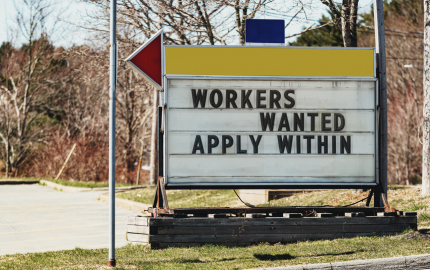
After more than a year of widespread unemployment, 2021 summer travelers saw establishments of all kinds advertising employment openings. With the expiration of pandemic-related federal and state unemployment benefits, many workers are returning to work. On July 2, the Bureau of Labor Statistics reported that employment is up. The jobs report tells us that the U.S. added 850,000 jobs in June, the largest increase in 10 months, though unemployment remains higher than normal at 5.9%. With pandemic restrictions mostly gone
Since vaccines have become readily available, employers have been grappling with whether they should mandate vaccines for employees. Most companies have chosen to “strongly encourage” employees instead of mandating, and many companies have even provided incentives such as gift cards or additional benefits as one way to encourage vaccinations.
Earlier this year, one Texas employer, Houston Methodist Hospital, however, established a mandatory vaccination policy. In opposition to the mandatory policy, over one hundred employees of the hospital sued, alleging that the
On June 21, 2021, the Occupational Safety and Health Administration (“OSHA”) published its first mandatory COVID-19 workplace safety rule, which as discussed below, also includes a surprising paid leave component for vaccination, vaccination side effects, and employees that contract COVID-19. The long-awaited Emergency Temporary Standard (“ETS”) applies only to employers in certain healthcare-related work settings and is the first time since the start of the pandemic that OSHA has imposed regulatory requirements relating to COVID-19 workplace safety. Before the issuance
In my last post, “Real Estate Alphabet Soup: Y Is for Yard”, I continued my primer on the “alphabet soup” of real estate. This post continues to stir the “alphabet soup” and completes the recipe with the final ingredient, the letter Z.
I once heard a marketing consultant suggest that everyone should have a brief “elevator speech” for responding to inquiries about what you do for a profession and, in my case, what areas of law I practice. So my short
In February, we outlined some immediate and anticipated changes in the business immigration environment after the Biden Administration took office. Now that several months have passed and the Administration has had time to implement its policies, it is worth revisiting these issues.
Regulatory Changes
In its waning days, the Trump Administration introduced a number of regulations that would have restricted employment-based immigration programs in various ways. Upon taking office, the Biden Administration instituted a 60-day freeze on all pending and proposed regulations,
Under federal law, all employers (including public, private, government and not-for–profit employers, and employment agencies) are required to report certain data about new employees hired within 20 days of the employee commencing work to the National Directory of New Hires (NDNH). No business is exempt from reporting. Employers must also report re-hires or employees who return to work after 60 days of being laid off, furloughed, separated, granted a leave without pay or terminated from employment.
The goals of new-hire reporting
In early 2021, pursuant to INA § 212(f) the President of the United States issued a proclamation continuing the suspension of entry of certain travelers located abroad in an effort to control the spread of COVID (the “novel coronavirus” or “COVID-19”). We have previously discussed COVID-related travel and visa issuance restrictions issued in 2020 here (IV ban) and here (NIV ban). The landscape of restrictions has changed dramatically over the last 16 months. At this time, there are multiple COVID-related geographic
This website does not track your personal or demographic information, only anonymous usage statistics. To ensure that you are not tracked, we have blocked all embedded content from third party sources like YouTube and SlideShare. Click "Accept Cookies" to enable third-party content. To learn more about our cookie policy, click here.