Hackers used a phishing attack to infiltrate the city’s network and then deployed ransomware.
On May 26, 2020, after receiving a tip from a dark web specialist, cybersecurity blogger Brian Krebs alerted the city of Florence, Alabama that hackers with a history of deploying ransomware had infiltrated the city’s network by stealing the credentials for the city’s IT manager in a May 6 phishing attack.
Grateful for the tip, the city’s system administrator informed Krebs that the city took action to isolate
On July 15, 2020, the Virginia Safety and Health Codes Board adopted the Emergency Temporary Standard, Infectious Disease Prevention, SARS-CoV2 Virus that Causes COVID-19 (ETS), making Virginia the first state to adopt COVID-related workplace safety regulations. The text of the ETS is currently being finalized and will go into effect upon publication, which is expected to occur the week of July 27, 2020. The ETS will remain in effect for at least six months.
The ETS is designed to supplement current
The Court of Justice of the European Union (CJEU), the EU's highest court, declared on July 16, 2020, that the EU-U.S. Privacy Shield framework for the transfer of personal data from the EU into the United States is invalid. This ruling, issued in Data Protection Commissioner v. Facebook Ireland, Ltd., Maximillian Schrems, Case C-311/18 (E.C.J. July 16, 2020) (known more broadly as the Schrems II case), was one of the most highly anticipated court rulings of the year and will
With the COVID-19 pandemic creating a significant upswing in Chapter 11 bankruptcies and with more expected to come, Congress is once again considering substantial changes to the way the Bankruptcy Code addresses worker compensation, retiree benefits and collective bargaining agreements with the Protecting Employees and Retirees in Business Bankruptcies Act of 2020 (PERBBA), introduced recently in both the House and the Senate (House Bill 7370; Senate Bill 4089). PERBBA is the latest iteration of legislation designed to add additional worker
In my last post, “Real Estate Alphabet Soup: O Is for Option” I continued my primer on the “alphabet soup” of real estate. This post continues to stir the “alphabet soup” with the letter “P.”
P is for “Property”. The legal term “property” in the world of real estate can include both personal property and real property. “Real Property” includes real estate; specifically, the land and improvements built and situated upon it. “Personal Property” may include items contained within the improvements
On July 8, 2020, the Supreme Court of the United States issued two new opinions applying First Amendment religious rights to employers. The first case, Our Lady of Guadalupe School v. Morrissey-Berru, No. 19-267 (July 8, 2020), overturned the Ninth Circuit in expanding the individuals employed by religious institutions that are exempt from anti-discrimination laws. The second case, Little Sisters of the Poor Saints Peter and Paul Home v. Pennsylvania, No. 19-431 (July 8, 2020), overturned a nationwide injunction instituted
Update: The two energy companies constructing the Atlantic Coast Pipeline have abandoned their six-year bid to build it. Despite the recent US Supreme Court win we discuss below, the companies cite high costs and regulatory uncertainty behind their decision to discontinue the project.
The Atlantic Coast Pipeline is a planned $8 billion, 600-mile natural gas pipeline from West Virginia to North Carolina. Petitioner Atlantic Coast Pipeline, LLC seeks to build the pipeline, which would traverse 21 miles of national forests and
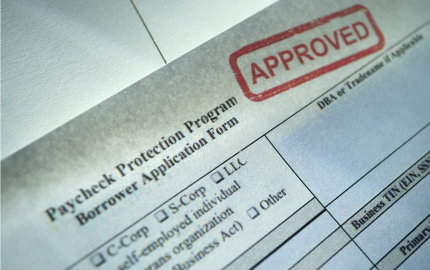
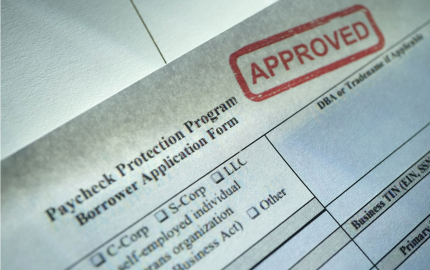
On July 6, 2020, the Small Business Administration (SBA), in coordination with the Department of the Treasury, released data about borrowers who applied for and received money from the Paycheck Protection Program (PPP). Borrowers who received PPP loans of at least $150,000 are mentioned by name; borrowers who received PPP loans under $150,000 are not mentioned by name. Here are the other important details:
Borrowers Who Received at Least $150,000:
In addition to borrower name, certain other information pertaining to the borrower
Effective July 1, 2020, Virginia’s employment laws are substantially changing to provide broader protections to employees in many areas. We previously summarized the Virginia Values Act (VVA), which goes into effect on July 1, 2020, and subjects employers with more than five employees to new state claims for, among other things, gender identity and sexual orientation discrimination and for larger damage awards.
Because of the significance and volume of the new laws going into effect July 1, 2020, we covered the
Effective July 1, 2020, Virginia’s employment laws are substantially changing to provide broader protections to employees in many areas. We previously summarized the Virginia Values Act (VVA) here which goes into effect on July 1, 2020 and subjects employers with more than five employees to new state claims for, among other things, gender identity and sexual orientation discrimination and for larger damage awards.
Because of the significance and volume of the new laws going into effect July 1, 2020, we will
Last night, President Trump signed a Presidential Proclamation imposing entry restrictions on certain foreign nationals in temporary work visa statuses, including H-1B, L-1, J-1 and H-2B, and related categories for dependents, with some exceptions. The restrictions will take effect on June 24, 2020, at 12:01am EDT and will expire on December 31, 2020, subject to possible extensions. Additionally, the Proclamation extends the current restrictions on certain immigrant visa applicants until December 31, 2020. The Proclamation will only impact foreign nationals
On May 23, 2020, Howard County Executive Calvin Ball approved emergency legislation (Bill No. 33-2020) (the “Bill”) passed by the Howard County Council, which prohibits certain rent increases, changes in lease terms and certain other actions by residential and commercial landlords and mobile home park owners.
This discussion will focus on the Bill’s provisions regarding commercial landlords and tenants.
Prohibitions on Landlords
During the Catastrophic Health Emergency declared by Governor Hogan on March 5, 2020 (the “Emergency”), and thereafter for the duration of
On Thursday, June 18, the Supreme Court rejected the Trump Administration’s attempt to end the Deferred Action for Childhood Arrivals (DACA) program for undocumented immigrants brought to the country as children, known as “Dreamers.” The 5 to 4 decision was written by Chief Justice John G. Roberts Jr. and joined by the court’s four liberal justices. The Supreme Court held that the Department of Homeland Security (DHS)’s effort to terminate the DACA program was arbitrary and capricious, and remanded the
According to media and other sources, the Trump Administration will likely issue a Presidential Proclamation instituting additional immigration restrictions by the end of this month. The Proclamation is likely to extend the April 22, 2020, Presidential Proclamation, “Suspending Entry of Immigrants Who Present Risk to the U.S. Labor Market During the Economic Recovery Following the COVID-19 Outbreak,” which suspended immigrant visa processing for some applicants for permanent residency for 60 days. The new Proclamation is also expected to impose temporary
Last week, the U.S. Equal Employment Opportunity Commission (EEOC) released additional information within its “What You Should Know About COVID-19 and the ADA, the Rehabilitation Act, and Other EEO Laws” guidance. In March 2020, the EEOC began periodically releasing frequently asked questions and corresponding answers about the intersection of the laws it enforces and COVID-19. As the enforcer of workplace anti-discrimination laws, including the Americans with Disabilities Act (ADA), the Rehabilitation Act, Title VII of the Civil Rights Act (“Title
In a seminal 6–3 decision for LGBTQ rights on Monday, June 15, 2020, the Supreme Court of the United States held plainly: An employer who fires an individual merely for being gay or transgender defies the law. The Opinion by Justice Gorsuch, issued more than eight months after the Supreme Court heard oral arguments in the three consolidated cases at the center of this action, provides that an employer who intentionally treats a person worse because of sex—such as by
In my last post, “Real Estate Alphabet Soup: N Is for Notice” I continued my primer on the “alphabet soup” of real estate. This post continues to stir the “alphabet soup” with the letter “O.”
O is for “Option”. In both the sale and leasing of real estate there may be an “option” involved.
An “option” contract is a binding agreement or contract between the parties in which the property owner agrees that a party shall have the privilege to purchase the
With the onset of COVID-19, there is increased attention on force majeure clauses – what they are, when they can be invoked, how they operate, and how they might change in the future. This is especially true in construction matters, where many projects have been delayed, often due to some combination of the following: government regulations and executive orders implementing quarantines, stay-at-home orders, or other restrictions; decreased workforce due to illness; unavailability of goods and materials; loss of access to
You don’t need a legal blog to tell you that the country is in a state of extreme unrest regarding the killings of George Floyd, Ahmaud Arbery, Breonna Taylor and so many other Black people, at the hands of police and in other racially charged incidents. People in the United States and abroad have engaged in protests about issues related to race in America, including police brutality and institutional racism. In addition to people protesting in the streets, millions more
The U.S. Department of Justice (“DOJ”) is scrutinizing borrowers who have applied for loans through the Small Business Administration’s Paycheck Protection Program (“PPP”), established by the Coronavirus Aid, Relief, and Economic Security Act (“CARES Act”). To date, the DOJ has filed charges in seven separate cases against defendants accused of fraud in connection with PPP loans, and the number of charges continue to grow. These charges demonstrate the Government’s strong intent to claw back any loan proceeds which were obtained
On May 28, 2020, the U.S. House of Representatives near-unanimously passed the Paycheck Protection Program Flexibility Act of 2020, H.R. 7010 (the “PPP Flex Act” or the “Flex Act”) as national leaders look to provide additional, more expansive support to small businesses impacted by COVID-19. The Senate passed the PPP Flex Act on June 3, and President Trump signed it into law on June 5. This bill follows multiple rounds of guidance released by the Small Business Administration (the “SBA”),
On May 7, 2020, in accordance with Article II, Section 16(c) of the Maryland Constitution, Governor Hogan allowed hundreds of Maryland bills to become law without his signature. Many of these laws will have direct implications on the workplace that employers should be aware of. A summary of these employment-related laws is provided below. All will become effective on October 1, 2020.
Expansion of Employers’ Notification and Reporting Obligations for Workforce Layoffs
S.B. 780, referred to as “Maryland’s Mini-WARN Act” (a state
On May 28, 2020, The Secretary of Commerce opened a new investigation to determine the effects on national security from imports of vanadium, pursuant to its authority under Section 232 of the Trade Expansion Act of 1962. Interested parties are invited to submit written comments, data, analyses, or information pertinent to the investigation, no later than July 20, 2020. A party potentially impacted in any way – directly or indirectly - by vanadium tariffs should consider submitting comments.
Section 232 is
Businesses required by the Occupational Safety and Health Administration (OSHA) to maintain a log of work-related injuries and illnesses—referred to as an “OSHA 300 Log”—must now pay additional attention to whether employee cases of COVID-19 are “work-related” and therefore recordable. As of May 26, 2020, OSHA has announced that its earlier enforcement guidance— exempting employers (except for those in certain high-risk industries) from recording cases of COVID-19 absent obvious indications of “work-relatedness”—will be rescinded and replaced with a revised enforcement
U.S. Citizenship and Immigration Services (USCIS) today announced that it will resume premium processing for Form I-129 and Form I-140 petitions in phases over the next month. On March 20, USCIS announced the temporary suspension of premium processing for all Form I-129 and I-140 petitions due to the coronavirus (COVID-19).
Effective June 1, 2020, USCIS will accept Form I-907, Request for Premium Processing Service, for all eligible Form I-140 petitions.
Effective June 8, USCIS will accept premium processing requests for:
H-1B petitions filed
As MGT Construction 1 executives start pleading guilty to conspiracy to commit wire fraud and bank fraud, every construction company executive should reflect on the duties of disclosure owed to their bonding companies. Inadequate disclosures carry a range of legal risks.
The legal risk of securing a performance bond without disclosing material facts typically arises through a claim by the bonding company for concealment of material facts. In such claims, the bonding company could request that sufficient collateral be provided to cover the
On May 8, 2020, the Office of Federal Contract Compliance Programs (“OFCCP”) announced the issuance of a new form that federal contractors must use to ask job applicants and employees to self-identify as disabled. This is the first revision to the form since March 2014, when the regulations implementing Section 503 of the Rehabilitation Act of 1973 were revised, and contractors were required to perform data collection regarding applicants and employees with disabilities. The 2014 regulations require federal contractors subject
On April 11, 2020, Virginia Governor Ralph Northam signed into law the Virginia Values Act (VVA), which will subject employers with more than five employees to state claims for discrimination with increased damages. The new law, which goes into effect July 1, 2020, also adds gender identity and sexual orientation to the list of classes protected under the Virginia Human Rights Act (VHRA).
Prior to the passage of the VVA, the VHRA only applied to employers with more than 5 and
With COVID-19 holding the global economy captive, Congress is attempting to head off what they predict will be an economic tidal wave of evictions, foreclosures and civil judgments by introducing The Small Business and Consumer Debt Collection Emergency Relief Act of 2020 (the “Bill”). Per its Senate sponsors, the Bill would modify and expand the Fair Debt Collections Practices Act or FDCPA (the “Act”)—the federal statute that regulates consumer debt collection practices—to better protect individuals during national emergencies and also
Governor Larry Hogan allowed Senate Bill 780 to become law without his signature on May 7, 2020. The law will become effective on October 1, 2020. This new law significantly revised the existing Economic Stabilization Act (MD Code, Labor and Employment §11-301 – §11-304)(“Act”) and will drastically change Maryland employers’ notification and reporting obligations regarding workforce layoffs.
Previously, the Act provided voluntary guidelines for employers who intended to lay off employees regarding the provision of notice to those employees. Under the
On May 13, 2020, the U.S. Small Business Administration (SBA), in consultation with the U.S. Department of the Treasury, provided the following critical guidance on the good-faith certification requirement for Payroll Protection Program (PPP) borrowers (updated FAQ):
Any borrower who, together with its affiliates, received PPP loans with an original principal amount of less than $2,000,000 will be deemed to have made the necessity certification in good faith.
Borrowers with PPP loans at or above $2,000,000 may still be deemed to have
The COVID-19 emergency has impacted businesses throughout the country, from placing restrictions on reopening to dealing with the nuances of the CARES Act. Another workplace issue that will rise out of this national emergency is how the workers’ compensation system will deal with COVID-19 claims.
Workers’ compensation is usually the exclusive remedy for employees injured at work. The system benefits employees by providing injured employees the prospect of swift and sure compensation, without having to prove their employer was at fault.
As shutdown orders expire and businesses reopen, questions arise on the possible liabilities created and the ability to mitigate them. Standards are emerging; some will be second-guessed. Previous modes of operation may continue or be rapidly changed. Trust and loyalty of customers and employees will soon be tested. Rules and recommendations will vary widely based on the nature of the business, its workspace footprints, exposure to the public and availability of necessary resources. What can be offered are not stringent
In a decision some believe may generate more trademark infringement litigation, the U.S. Supreme Court recently ruled that a trademark owner does not have to prove a defendant acted willfully to receive a profits remedy in some cases.
On April 23, 2020, on appeal from the Second Circuit Court of Appeals, the Court decided Romag Fasteners, Inc., v. Fossil, Inc. Under an agreement between Romag and Fossil, Romag made magnetic fasteners used on Fossil’s handbags and other products. Romag learned, however,
On April 15, 2020, we provided an industry alert giving a summary of the initial structure of the Main Street Lending Program (MSLP). Since that date, the Board of Governors of the Federal Reserve System (the “Board”) has posted Term Sheets and Frequently Asked Questions dated April 30, providing additional clarity on the three facilities comprising the MSLP. This piece provides an overview of the MSLP in light of the additional guidance. MSLP is distinguished from the Payroll Protection Plan
Last month, Virginia’s General Assembly enacted a new law that makes contractors on large construction projects liable for unpaid wages owed to their subcontractors’ employees. Senate Bill 838, codified at Virginia Code § 11-4.6 and § 40.1-29 has four major effects:
It makes the general contractor—and all tiers of subcontractors working on the project—contractually liable to pay their subcontractor’s (at any tier) employees’ wages;
It requires that such payments equal or exceed those required by applicable statutes, such as Virginia’s Minimum Wage
In my last post, “Real Estate Alphabet Soup: M Is for Force Majeure” I continued my primer on the “alphabet soup” of real estate. This post continues to stir the “alphabet soup” with the letter “N.”
N is for “Notice.” Every real estate contract or lease should include a paragraph containing “notice” provisions. Notice provisions typically will include the name, address and contact information for where and how any notice should be provided when required under the terms of the contract
On Sunday, May 3, 2020, the Centers for Disease Control and Prevention (CDC) updated their Frequently Asked Questions for General Business and released guidance for Symptom-Based Strategy to Discontinue Isolation for Persons with COVID-19. The new guidance is targeted at assisting employers as they try to navigate the landscape of reopening businesses during the COVID-19 outbreak.
When returning individuals to work, the employer should take proactive measures to prevent the spread of the virus in the workplace, including limiting social interaction,
On April 30, 2020, the Internal Revenue Service (IRS) issued Notice 2020-32 (the “Notice”) to address the deductibility of loan amounts received under the Paycheck Protection Program (PPP) of the Coronavirus Aid, Relief, and Economic Security Act (the “CARES Act”). In summary, the IRS stated no tax deduction will be allowed for expenses paid with PPP loan proceeds to the extent such amounts are forgiven under the terms of the CARES Act. This alert outlines the PPP loan forgiveness provision
Until recently, employers had largely ignored unemployment claims other than to contest an occasional claim. Now, however, as employers consider different options to address the impact of the COVID-19 pandemic on their business, they find themselves struggling to understand the system and the impact it may have on their operations. While unemployment rules and regulations will vary on a state-by-state basis, there are some general principles that employers should understand to help them develop the best business plan for their
Governor Larry Hogan, the Maryland Department of Health (MDH) and the state’s long-term care provider community continue to take aggressive steps to combat COVID-19 in nursing homes and other long-term care settings.
Most recently, on April 29, 2020, Governor Hogan issued Executive Order Number 20-04-29-01, which amended and restated all previous orders for nursing homes and other senior facilities and imposed new strict compliance requirements. The MDH published a new accompanying Directive and Order further clarifying the requirements from the Governor’s Executive
As indicated in an earlier Miles & Stockbridge Government Contracts blog post, contractor reimbursement language in Section 3610 of the CARES Act raised numerous questions that contractors attempted to answer in the early weeks since the CARES Act’s enactment. Section 3610 permits agencies to provide many federal contractors struggling to stay afloat during the COVID-19 pandemic with financial relief by reimbursing certain paid leave costs, including sick leave. Since enactment, several individual agencies have taken steps to answer many of
One of 2019’s most significant construction cases underscores the importance of strictly adhering to a contract’s written terms. The case resulted from the FBI’s award to a general contractor a construction contract for a large FBI facility. Part of the project involved fabricating and installing precast concrete panels on an existing parking garage structure. The general contractor hired a subcontractor to fabricate and install the precast concrete panels.
The FBI required the general contractor to verify and accept the existing parking
On April 22, 2020, President Trump issued a proclamation suspending the entry of certain immigrants for 60 days. The proclamation applies only to a limited group of new immigrants who are currently outside the United States and does not impact foreign nationals who are in the U.S. or who are seeking to enter on temporary visas. However, the proclamation does leave the door open for future restrictions, which may impact those in temporary work visa status such as H-1B, TN
On April 17, 2020, the Centers for Medicare and Medicaid Services (CMS) issued an MLN Matters Special Edition Article with additional guidance for rural health clinics (RHCs) and federally qualified health centers (FQHCs) during the COVID-19 public health emergency (COVID-19 PHE).
The Coronavirus Aid, Relief, and Economic Security Act (CARES Act), which was signed into law on March 27, 2020, permits RHCs and FQHCs to furnish distant site telehealth services to Medicare beneficiaries during the COVID-19 PHE. Prior to the CARES
On April 17, 2020, the EEOC updated its guidance initially published on March 17, 2020, entitled “What You Should Know About COVID-19 and the ADA, the Rehabilitation Act, and Other EEO Laws” to address additional employment concerns in the wake of the COVID-19 pandemic. Notable new topics addressed by the guidance, including issues related to temporary accommodations, undue hardship and returning to work, are discussed below. For a summary of the topics previously addressed by the EEOC in this guidance,
On Thursday, April 23, 2020, the U.S. Small Business Administration (SBA), in consultation with the U.S. Department of the Treasury, added new guidance to their Paycheck Protection Program (PPP) FAQ document, located here, which addresses certain questions regarding PPP loans under the CARES Act. This guidance was issued as Congress passed legislation that adds an additional $310 billion to the PPP. Most critically, SBA addressed the requirement that PPP borrowers certify that “[c]urrent economic uncertainty makes this loan request necessary
CMS continues to issue revised guidance to health care providers to assist them with dealing with the COVID-19 crisis, including blanket waivers of CMS’s conditions of participation (“CoPs”). New guidance published from CMS’s Center for Clinical Standards and Quality/Quality, Safety and Oversight Group expands these waivers to licensed independent freestanding emergency departments by allowing them to enroll as a Medicare/Medicaid-certified hospital and bill for both inpatient and outpatient services.
Freestanding emergency departments (IFEDs) are state-licensed emergency departments that are unaffiliated with hospitals.
Atlantic Coast Pipeline, LLC (“Atlantic”) recently won another battle in its quest to construct an interstate natural gas pipeline across West Virginia, Virginia, and North Carolina. Twenty-seven of its planned 604 miles traversed Nelson County, Virginia. Nelson County’s zoning ordinance required a facility used to “transport” hazardous materials across a Special Flood Hazard Area obtain a discretionary variance from the Nelson County Board of Zoning Appeals. Not wanting the pipeline and contending it would adversely impact its floodplain, the Nelson
The coronavirus has had an adverse impact on many businesses and affected their ability to meet financial obligations. To relieve financial strain, business owners have various options to discharge debt, modify loans and transfer property to their lenders. Below are some of the tax issues a business should consider when assessing debt relief options. Note this list is not exhaustive, and the options available will vary depending on a business’s particular situation.
Transferring Property to Lender. The tax treatment of a
This website does not track your personal or demographic information, only anonymous usage statistics. To ensure that you are not tracked, we have blocked all embedded content from third party sources like YouTube and SlideShare. Click "Accept Cookies" to enable third-party content. To learn more about our cookie policy, click here.