Sometimes, a retirement plan is required to distribute a missing participant’s account balance into a state’s unclaimed property fund. Until recently, it was unclear whether this distribution is subject to withholding of federal income tax and how this distribution is supposed to be reported to the IRS.
The IRS finally cleared up both issues by ruling that (1) the total amount distributable (i.e., the entire account balance) is subject to withholding of federal income tax, and (2) any distribution of $10
A recent opinion by the United States Bankruptcy Court for the Western District of North Carolina kept alive a bankruptcy trustee’s fraudulent conveyance claims based on, in part, the Internal Revenue Code (“IRC”) 10-year statute of limitations period to avoid fraudulent transfers—rather than a shorter limitations period under state law. The case is Mitchell v. Zagaroli et al. (In re Peter Lawrence Zagaroli), Case No. 18-50508, Adv. Proc. No. 20-05000, 2020 WL 6495156 (Bankr. W.D.N.C. November 3, 2020).
In Zagaroli, the
On November 18, 2020 the Internal Revenue Service (IRS) released a Revenue Ruling (Rev. Rul. 2020-27) and a Revenue Procedure (Rev. Proc. 2020-51) that discuss the handling of deductions for expenses paid with forgivable Paycheck Protection Program (PPP) loan proceeds in circumstances when either: (i) forgiveness has been applied for, but not granted by the end of 2020, or (ii) forgiveness has not been applied for, but all events have been met to give rise to a forgiveness application in
As the holidays approach, many businesses have employees who travel or attend large family gatherings. Employers who have reopened their doors to working in-person will face questions about how to safely return to work after potential exposure during the holidays. Here are a few likely questions and guidance for employers to help control the spread of COVID-19.
1. Can employers monitor where employees travel?
Yes. According the Equal Employment Opportunity Center (“EEOC”), if the CDC or state or local public health officials
The Justice Department announced on November 10, 2020 that it signed a settlement agreement with Fleetlogix Inc. (“Fleetlogix”) resolving claims that the company discriminated against work-authorized, non-U.S. citizens by requiring them to provide specific and unnecessary work authorization documentation because of their citizenship or immigration status. Fleetlogix, based in San Diego, California, operates offices nationwide that provide cleaning and transportation services to rental car companies.
The Justice Department’s underlying investigation in 2019 that led to the settlement showed that Fleetlogix required
Most state mortgage finance, consumer credit, collection agency, sale finance, and money service business licensing laws have a provision that dictates what needs to be done or what needs to be filed in connection with the change in control of a licensee, such as when a licensed entity is going to be acquired by a new owner, when an investor looks to acquire a licensed entity, or when the ownership of a licensee is restructured. All too often the state
Background
On August 8, 2020, a Presidential Memorandum was issued that allowed employers to defer withholding and payment of certain payroll tax obligations of their employees. To implement the Presidential Memorandum, the IRS issued Notice 2020-65 (“Notice”) on August 28, 2020, which gave employers the option to defer withholding of employee-side Social Security taxes from employee paychecks. The Notice allowed for the deferral of such withholding for wages paid from September 1, 2020 to December 31, 2020, if the wages were
In 2017, the Tax Cuts and Jobs Act (the “Act”) added a third minimum set-aside option to qualify a project as a qualified low-income project pursuant to Code Section 42(g)(1)(C)—the Average Income Set-Aside. The Average Income Set-Aside permits the owner to designate rest-restricted units to be occupied by qualified tenants so long as the average imputed income limitation for all the low-income units is 60% or less of the area median gross income (“AMGI”). To calculate the average, the owner
In our Legislative Alert of October 13, 2020, we reported on the California legislation enacted in late September, Assembly Bill 1864, that created the new California Consumer Financial Protection Law (“CCFPL”),1 and we set out certain of the activities that trigger a registration obligation. As we last reported, the CCFPL, when it takes effect on January 1, 2021, will be administered by the Department of Financial Protection and Innovation (the “DFPI”). The DFPI is the new name of the California
On November 3, 2020, California voters passed Ballot Proposition 24,The California Privacy Rights Act of 2020 (“CPRA”), significantly amending the State’s recently effective California Consumer Privacy Act (“CCPA”), which is now known under the CPRA designation. Passage of CPRA means significant changes to CCPA, including the establishment of a new privacy enforcement agency, new definitions and usage limitations for sensitive data, and expanded breach liability. Businesses accessing and using the personal data of California residents are subject to CPRA and
On September 28, 2020, the New York City Council enacted Int 2032-2020, “Requiring city employers to provide earned safe and sick time to employees.” This local law amended the city’s Paid Safe and Sick Leave law and becomes effective in two parts.
On September 30, 2020, the following amendments became effective:
Employers must provide domestic workers with 40 hours of paid safe and sick leave;
Employers must allow employees to use safe and sick leave as it is accrued;
Employers must reimburse employees who
The Equal Employment Opportunity Commission (“EEOC” or “Agency”) has issued new procedural regulations for handling employment discrimination charges. 29 CFR 1601; 29 CFR 1626. The regulations now provide for the digital filing of charge-related documents. The EEOC’s digital charge filing system was piloted in 2015 and has been in place for some time on certain charges. While digital filing is not compulsory, it is now codified as the preferred option for charging parties and respondents to submit documents to the
In my last post, “Real Estate Alphabet Soup: R Is for Real Property” I continued my primer on the “alphabet soup” of real estate. This post continues to stir the “alphabet soup” with the letter “S.”
S is for “Survey.” A “survey” or “land survey” is the determination of a three dimensional image of land and positions, using points and distances, as determined by electronic distance measurements. A professional land “survey” is prepared by a trained, licensed professional land surveyor using
Its Presidential election time, and we strongly encourage you to vote on or before November 3rd. If you have not yet done so, please vote, whoever may be your preference.
Now that we have addressed our civic duty, we also encourage you to elect to renew any state licenses you hold through the Nationwide Multistate Licensing System (“NMLS”). Regardless of whether you hold a mortgage finance, consumer credit, money service business, collection agency, other state license through the NMLS, the renewal period
A medical device manufacturer learned what might seem an obvious lesson when it paid $18 million to settle a False Claims Act lawsuit brought by its former Compliance Officer: don’t ignore your compliance officer. The federal government received $15.21 million; state governments received $2.79 million; and the whistleblower received $2.65 million of the federal share. The company, Merit Medical Systems, Inc. (MMS), also must pay attorneys’ fees due to the whistleblower’s counsel and enter into a five-year Corporate Integrity Agreement with the
On October 9, 2020, the Equal Employment Opportunity Commission (EEOC or Commission) published in the Federal Register a proposed rule describing amendments it intends to make to the regulations governing the statutory conciliation process. As stated in the proposed rule, the EEOC “… believes that providing greater clarity to the conciliation process will enhance the effectiveness of the process and ensure that the [EEOC] meets its statutory obligations.” Citing Mach Mining, LLC v. EEOC, 575 U.S. 480 (2015), the EEOC
The new California law discussed in this Legislative Alert does not have the earth-shattering significance of Trump versus Biden, or even Godzilla versus Mothra, but tremors have originated on the Pacific coast and are likely to be felt near the Potomac and in all lands in between.
Late last month, California Governor Gavin Newsom signed into law California Assembly Bill 1864, creating a state agency that is analogous to the federal Consumer Financial Protection Bureau ("CFPB"), an agency that has been under
As detailed in an earlier blog post, as of May 26, 2020, the U.S. Occupational Safety and Health Administration (OSHA) requires employers to determine whether employee cases of COVID-19 are work-related, and therefore recordable on the employer’s OSHA 300 Log. OSHA has issued guidance to assist employers in making the determination of work-relatedness, which should serve as a starting point in responding to a report that an employee has tested positive for COVID-19. As discussed previously, the determination of work-relatedness
On October 8, 2020, the U.S. Department of Homeland Security (DHS) and the U.S. Department of Labor (DOL) published new regulations that could dramatically tighten the eligibility requirements for H-1B visa petitions and substantially raise the wages that must be paid to foreign nationals in certain visa classifications, including H-1B and many employment-based green card categories. These new regulations are part of the Trump Administration’s wider effort to restrict legal immigration programs and further the goals of the Buy American,
The Department of Justice recently announced the results of its 2020 National Health Care Fraud and Opioid Takedown. This annual DOJ tradition, aimed at targeting and arresting individuals for health care fraud abuse, resulted in the filing of criminal charges against more than 50 doctors and more than 20 health care executives. Prosecutions spanned the country, including more than 50 federal districts and 40 U.S. Attorney’s Offices. FY2020’s efforts represent “the largest amount of fraud ever charged by the department
On September 22, 2020 the Department of Labor ("DOL") issued proposed regulations explaining how to determine whether a worker should be classified as an employee covered under the Fair Labor Standards Act ("FLSA") or an independent contractor (who is not covered by the FLSA). The proposed regulations would make it easier for companies to classify workers as independent contractors thereby eliminating their claims under FLSA (overtime and minimum wage for non-exempt employees), as well as claims under the Family Medical Leave
In my last post, “Real Estate Alphabet Soup: Q Is for Quitclaim” I continued my primer on the “alphabet soup” of real estate. This post continues to stir the “alphabet soup” with the letter “R.”
R is for “Restrictive Covenants” which are written promises governing and restricting the use of “Real Property”, which can include the kinds of buildings that may be constructed on it. Restrictive Covenants may be included in a deed or in a separate written document, which is
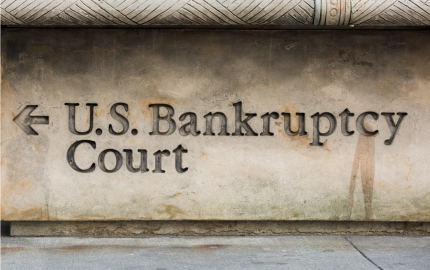
House Bill 7370 has gained additional support since we last reported on the Protecting Employees and Retirees in Business Bankruptcies Act of 2020 (PERBBA) and related Senate Bill 4089. Support for the bill now totals twenty-eight Democrat sponsors and co-sponsors. On September 29, 2020, House Bill 7370 advanced from the House Committee on the Judiciary to the full House for consideration, with a 20-10 committee vote along party lines.
If enacted as proposed, PERBBA would make significant changes to the bankruptcy
In the wake of the killing of George Floyd and other African Americans by police officers, many government contractors have undertaken social justice initiatives and increased training around unconscious or implicit bias. On September 22, 2010 President Trump signed an Executive Order "Combating Race and Sex Stereotyping" extending his ban on governmental agencies providing training that they believe is "divisive" and "promotes sexual and racial stereotyping" to Federal contractors and recipients of Federal grants. The Executive Order also requires posting notice of
U.S. Citizenship and Immigration Services (USCIS) will implement a new fee schedule on October 2, 2020 to account for increased costs in adjudicating immigration applications and petitions. The new fee schedule also ushers in new versions of certain immigration forms, including those for work visa categories, as well as a longer timeframe for premium processing.
Fees for USCIS petitions and applications increased most recently in December 2016 and 2019, and they are slated for another increase in October 2020. On August
With just a few weeks left in FY 2020, the OFCCP has published new lists of 2,450 establishments for audit. Federal contractors and subcontractors are highly encouraged to check the lists—one for supply and service contractors (which includes universities/colleges for the first time in three years), and one for construction contractors. The lists can be found here.
The CSAL lists reflect a number of changes at OFCCP that are new. First, in a new era of remote audits, OFCCP District Offices
The Center for Disease Control (“CDC”) previously advised that it was not necessary for asymptomatic individuals to be tested even after a known exposure to COVID-19. This guidance drew sharp criticism from many, including the Infectious Disease Society of America. On September 18, 2020, the CDC reversed its course. Now, because of “the significance of asymptomatic and pre-symptomatic transmission,” guidelines state that anyone who has been within 6 feet of a person with COVID-19 for at least 15 minutes should
Gender segregation in bathrooms, which some conservatives have predicted for decades would be undermined by sex discrimination laws, has in fact proven to be a persistent target for civil rights litigation in at least one narrow respect: when bathroom access by the transgendered is restricted. The United States Court of Appeals for the Fourth Circuit, which hears federal cases brought in Maryland and Virginia, and three other southeastern states, recently re-addressed the subject as it affected a transgendered public school
The Small Business Restructuring Act of 2019, Pub. L. 116-54, 133 Stat. 1079 (Aug. 23, 2019) (SBRA) became effective February 19, 2020. SBRA, among other things, created a new Subchapter V under Chapter 11 of Title 11 of the United States Code. Its purpose was to provide business debtors a more streamlined bankruptcy process for rehabilitating and restructuring debts when compared to a traditional Chapter 11 case. A further goal was to reduce the time and expense of small business
On September 16, 2020, the U.S. Department of Labor published emergency regulations (making them effective as of the day of publication) revising certain portions of the Families First Coronavirus Response act (FFCRA) in response to a decision from a federal court in New York finding certain portions of the previous regulations invalid.
The court had struck down four important provisions of the existing regulations relating to:
The work-availability requirements
Employer consent to intermittent leave
The definition of “health care provider”
Documentation required for leave
The court’s
For those who may have missed it during a pandemic summer, on May 7, 2020 Governor Hogan allowed hundreds of Maryland bills to become law, some of which will have direct implications on employers. A summary of the employment related laws, along with recommendations on how employers can implement them in the workplace, is provided in Miles & Stockbridge’s June 8, 2020 publication titled “Maryland Enacts Host of New Laws”. Each of the laws discussed therein will become effective on
This week we take look at two recent federal decisions concerning the False Claims Act (“FCA”).
The first case, Ndoromo v. Barr, is interesting because of the billion dollars in alleged damages.
In this case out of the U.S. District Court for the District of Columbia, the pro se plaintiff sued various government officials, including the United States Attorney General, for over $1 billion dollars in damages. In separate, prior proceedings, the plaintiff was convicted of various criminal charges, including healthcare fraud.
The United States Patent and Trademark Office (USPTO) just issued a warning to be on the alert for “fraudulent emails that appear to originate from the United States Patent and Trademark Office (USPTO) domain, @uspto.gov.”
The USPTO goes on to say:
“These emails are a scam and do not come from the USPTO. Beware that these messages:
Spoof the USPTO email address (e.g., noreply@uspto.gov).
Falsely claim that the USPTO has a new policy requiring separate registration of “clients” and that there is a “penalty”
A look at selected soon-to-be-reported decisions on various False Claims Act issues.
This month we can glean three quick lessons:
1) A lesson for corporate executives: If you are the owner/CEO, don’t transfer company funds to your personal bank account, particularly if the funds represent Medicaid payments received from inappropriately submitted claims.
A home health care company, with a single owner/CEO and six employees, allegedly submitted claims for reimbursement to the D.C. Medicaid program for services provided to patients without adequate documentation of
With Labor Day upon us, many families are facing the start of a school year with remote or hybrid learning. As a result, many employees must figure out how to satisfy their work obligations while making alternate arrangements for childcare until schools re-open in-person. During this time, employers must keep in mind that the Family First Coronavirus Response Act (FFCRA) may provide paid leave to eligible employees struggling to arrange for childcare as the result of school closures.
As detailed in a
The answer, maybe, but it depends on the facts in each case.
Merely because a company has its outside legal counsel directly retain a third party service provider for an incident response, i.e., digital forensics, does not guarantee that the forensic breach report provided to the outside counsel can be protected from disclosure under the attorney work product doctrine. In a recent court decision, In re: Capital One Customer Data Security Breach Litigation, E.D. Va., No. 1:19-md-02915, the court refused to
The United States Patent and Trademark Office (USPTO) is increasing many of the patent and trademark fees effective October 2, 2020. On average, the fees are increasing by 5 – 10 percent. Below is a summary of the larger changes and their economic impact on your portfolio.
Current Fees
Final Patent Fee Schedule Fees
Increase/(Decrease)
Percentage Change
Description
Large Entity Fee
Small Entity Fee
Micro Entity Fee
Large Entity Fee
Small Entity Fee
Micro Entity Fee
Large Entity Fee
Small Entity Fee
Micro Entity Fee
Large Entity Fee
Small Entity Fee
Micro Entity Fee
Patent Application Filing Fees
Basic
A bill recently introduced in the House of Representatives would temporarily expand federal protections under the Fair Debt Collections Practices Act (FDCPA)—the federal statute that limits aggressive debt-collection activities. The House proposal, H.R. 7796 (titled the “Consumer Relief During COVID-19 Act”), is similar to a Senate bill that was introduced in March.
Two major differences between the bills, however, are worth noting:
First, as its title indicates, the Senate bill, S. 3565 (titled the “Small Business and Consumer Debt Collection Emergency Relief
On August 24, 2020, the U.S. Department of Labor released a Field Assistance Bulletin to provide guidance addressing how employers should track the number of hours worked by employees who are working remotely. While the guidance was issued to respond to current conditions caused by the COVID-19 pandemic, the guidance is a summary of existing law and applies to all remote working arrangements, not just those resulting from the pandemic.
Under the federal Fair Labor Standards Act, employers have an obligation
Foreign brand owners can file trademark applications in China as national applications (CNAs) or International Registrations (IRs) under the Madrid Protocol. There are pros and cons to each route, and brand owners may find it difficult to decide on the filing approach. There are no easy answers to this subject, but specification coverage is always one of the key considerations as specification defines the scope of protection of a trademark registration. A better understanding of the unique classification of goods
In July, Maryland’s highest court published two decisions that could impact limited liability companies (“LLC”) and other entities which operate in the State. The first of these decisions, Plank v. Cherneski, provides clear guidance on breach of fiduciary duty claims in Maryland; the second decision, 7222 Ambassador Road, LLC v. National Center on Institutions and Alternatives, Inc., analyzes the ability – or lack thereof – of LLCs to file appeals in Maryland courts when the LLC has forfeited the right
In my last post, “Real Estate Alphabet Soup: P Is for Property” I continued my primer on the “alphabet soup” of real estate. This post continues to stir the “alphabet soup” with the letter “Q.”
Q is for “Quitclaim”. A “Quitclaim Deed” is a form of deed which conveys only that right, title or interest which the owner or grantor has, or may have, in the property conveyed, and does not require that the grantor thereby necessarily pass good title to
In September 2019, the California legislature passed, and Governor Gavin Newsom signed into law, Assembly Bill 5 (“AB5”), which established a more stringent test for classifying workers as independent contractors. This so-called “ABC test” requires a hiring entity to establish all three of the following conditions in order to classify an individual as an independent contractor:
The person is free from the control and direction of the hiring entity in connection with the performance of the work, both under the contract
With the economic effects of the COVID-19 pandemic, the number of Chapter 11 bankruptcy filings, both large and small, has increased and more are expected. Struggling businesses that filed for bankruptcy relief could not take advantage of Paycheck Protection Program Loans (“PPP Loans”) authorized under the Coronavirus Aid, Relief, and Economic Security Act (“CARES Act”). Debtors became creative in their efforts to obtain and retain PPP Loans, often relying on the timing of filing (or dismissing and refiling) or supplemental
On August 3, 2020, a federal court in the Southern District of New York overturned key provisions of the Families First Coronavirus Response Act (FFCRA)—the federal law requiring certain employers to provide eligible employees with emergency paid sick leave (EPSL) and expanded family and medical leave (EFML) for specified reasons related to COVID-19—significantly broadening employee eligibility to receive emergency leave under the Act. The unexpected decision came in response to a challenge by the state of New York, which sought
Maryland Governor Larry Hogan’s Executive Order 20-07-29-01 (“Executive Order”) expands the statewide requirement to wear Face Coverings, and takes effect at 5:00 p.m. today. One of many expansions applies to persons “engaged in work in any area where: (a) interaction with others is likely, including without limitation, in shared areas of commercial offices; or (b) food is packaged or prepared.” Excerpts from Governor Hogan’s Executive Order on Face Coverings are attached here.
Businesses with employees may also wish to take the following
As more and more employees are returning to work, it is no surprise that employers are dealing with an influx of new issues. Guidance from the CDC and other agencies seems to change regularly, and employers may struggle to keep their policies up-to-date with the changes.
Since the start of the pandemic, the CDC has provided recommendations for individuals who were infected with the coronavirus to self-quarantine for a period of time. Employers have used these recommendations to determine when an
On July 27, 2020, a new rule went live, making it easier for retirement plans to communicate with participants electronically. This new rule modernized an existing rule that was becoming obsolete.
Existing Rule
Employer benefit plans must disclose certain information to participants. Information can be delivered electronically if delivery is calculated to ensure actual receipt. Receipt is presumed if information is sent to participants who have e-mail access at their workplace and who actively consent to electronic delivery, subject to additional conditions. Specifically, electronic
On July 21, 2020, the National Labor Relations Board (NLRB) issued a decision in General Motors LLC, 369 NLRB No. 127 (2020) which fundamentally changed the standard for, “determining whether employees have been lawfully disciplined or discharged after making abusive or offensive statements — including profane, racist, and sexually unacceptable remarks — in the course of activity otherwise protected under the National Labor Relations Act” (Act).
Prior to its decision in General Motors, the NLRB had established three different setting-specific tests
New Optional-Use FMLA Forms
On July 16, 2020, following a period of public comment, the DOL published new optional-use FMLA forms. The forms were revised by the DOL to make them easier to understand and use. For instance, the forms now contain fewer questions requiring written responses. Instead, the forms use statements and check boxes. This change is intended to cut down on the time it takes to complete the form and to cut down on the need for follow up
This website does not track your personal or demographic information, only anonymous usage statistics. To ensure that you are not tracked, we have blocked all embedded content from third party sources like YouTube and SlideShare. Click "Accept Cookies" to enable third-party content. To learn more about our cookie policy, click here.